 CupClarityMy notebook
 AeroPress Original XL vs Original: bigger batches, different planning
Compare one larger batch with repeated single servings, including filters, serving size, workspace and cleanup.
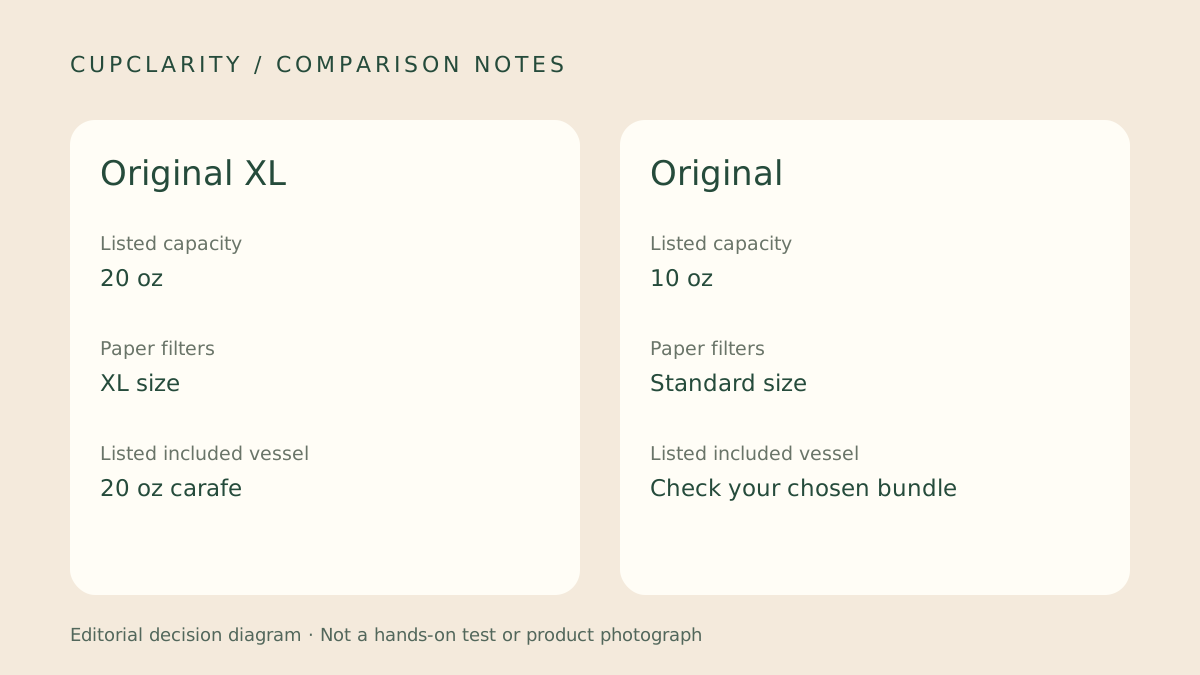
Research-based buying guide. Official sources checked October 15, 2026. We have not tested these products side by side. Scenarios and calculations are editorial analysis; no live price or taste ranking is implied. Illustration is schematic, not a product photograph.
| Decision point | Original XL | Original |
|---|---|---|
| Listed capacity | 20 oz | 10 oz |
| Paper filters | XL size | Standard size |
| Listed included vessel | 20 oz carafe | Check your chosen bundle |
| Best question | Do I regularly need a larger batch? | Is one preparation enough? |
| Recipe scaling | Recheck process after scaling | Keep a repeatable baseline |
Choose around your real serving size
Investigate Original XL if you regularly make coffee for more than one person and repeated preparations are the inconvenience you want to remove. Choose the standard Original when your normal drink already fits your routine. Occasional guests alone may not justify maintaining another filter size and another brewer. Measure the coffee you actually serve rather than relying on a cups label: two small servings and two large travel mugs are very different requests, even though both sound like coffee for two.
The verified size distinction
The official comparison lists 20 oz for Original XL and 10 oz for Original, and lists a carafe with the XL. AeroPress specifies XL filters for XL and standard filters for Original. Treat those as model-family distinctions, not a recipe telling you to fill the chamber to the brim. Check the current package and manual before purchasing. Existing standard filters are not an automatic supply for the larger brewer, so include filter availability in the ownership decision, especially when buying away from your home market.
Calculate the drink, then check the brewer
An illustrative plan for two 220 g black coffees requires 440 g of finished drink. At an illustrative coffee-to-brew-water ratio of 1:16, 440 g of brew water corresponds to 27.5 g of coffee, but that does not yield 440 g in the cup because some water remains with the grounds. Write beverage output and brew-water input as different quantities. A concentrated preparation followed by dilution is another recipe, not merely the same recipe squeezed into a smaller space. Use the dilution calculator when planning that approach.
A doubled ingredient list is only a starting point
If a familiar preparation uses 15 g coffee and 240 g water, doubling gives 30 g and 480 g mathematically. The ratio is preserved; the brewing behavior is not guaranteed to be. Use only quantities permitted by the exact brewer instructions, then evaluate contact time, mixing and the pressing routine. Start with the maker’s guidance and change one variable per trial. Do not increase force to compensate for an unsuitable grind or setup. Record what went into the brewer and what reached the serving vessel.
Compare elapsed work, not just the number of presses
A larger batch can remove repeated preparation steps but still requires weighing, heating, washing and dividing the drink. Two separate batches can suit two people who prefer different recipes. Time your current routine from setup to a clean counter before assuming which option saves time. On a shared desk or small kitchen, include the space for a stable receiving vessel and wet equipment. Follow the manufacturer’s support and handling instructions; a vessel merely having enough volume does not establish that it is suitable for pressing.
Make the ownership decision explicit
Choose XL when the same larger recipe is a regular need, its filter supply is convenient, and you have suitable preparation space. Keep Original when one serving dominates or different drink preferences make separate batches useful. For occasional company, compare the cost and effort of repeating your existing recipe before adding equipment. We do not claim a flavor winner or a measured time saving. This is a capacity-and-workflow decision, and the best evidence is the number and size of drinks your household actually prepares.
How we research these guides · Find your next step