 CupClarityOur approach
 Burr vs. blade grinders: what changes in your cup?
The difference is about control, consistency and how you like to brew—not just the price tag.
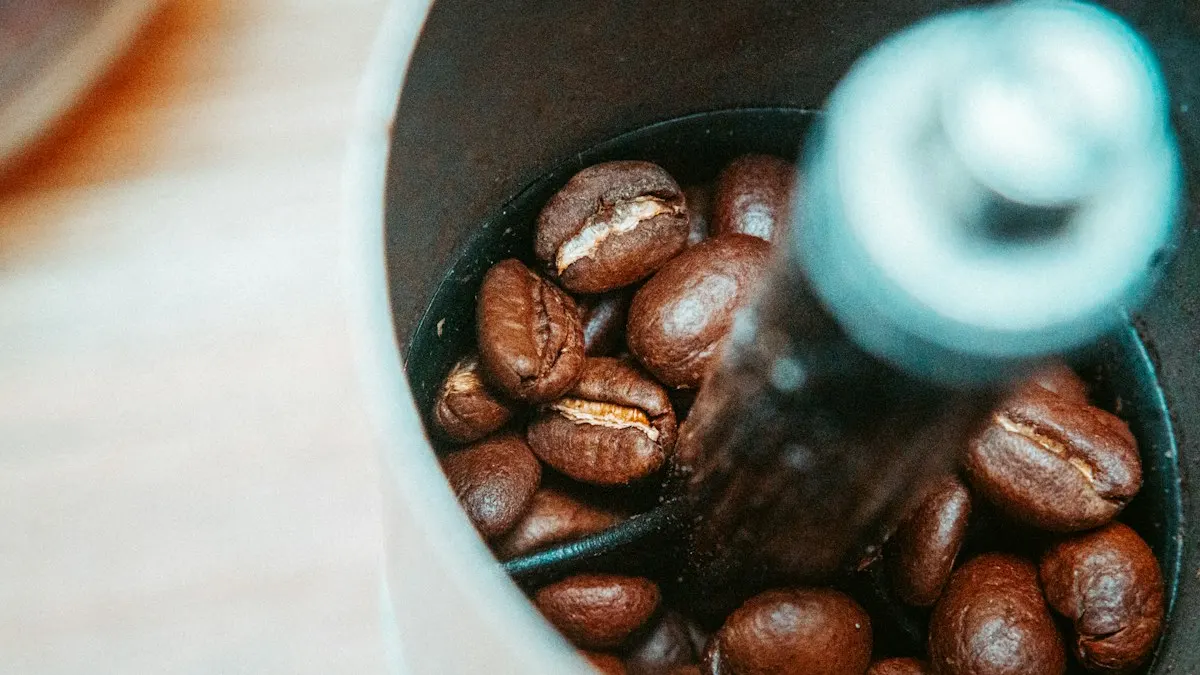
Two ways to break down a coffee bean
A blade grinder chops beans with a spinning blade. A burr grinder moves beans between grinding surfaces with an adjustable gap. That adjustable gap gives you a more repeatable way to change grind size.
Why grind consistency matters
Very fine and very coarse particles extract differently during brewing. A wide mixture can make a recipe harder to repeat. Burr grinders still produce a range of particle sizes, and performance varies between models, but their adjustment mechanism makes them a useful starting point for repeatable brewing.
Choose for your brewing method
Filter coffee needs a usable range of medium settings. Espresso places greater demands on fine adjustment; a grinder described as a burr grinder is not automatically suitable for espresso.
- Check the stated brewing methods and adjustment range.
- Consider counter space, noise and cleaning access.
- A hand grinder trades motor noise and cost for physical effort.
When to upgrade
Upgrade when the grinder prevents you from making repeatable adjustments. Before spending more, keep your beans, dose and water amount constant so you can identify what is actually changing.