Comparisons · 5 min read
AeroPress vs V60: Workflow, Filters & Brewing for Two
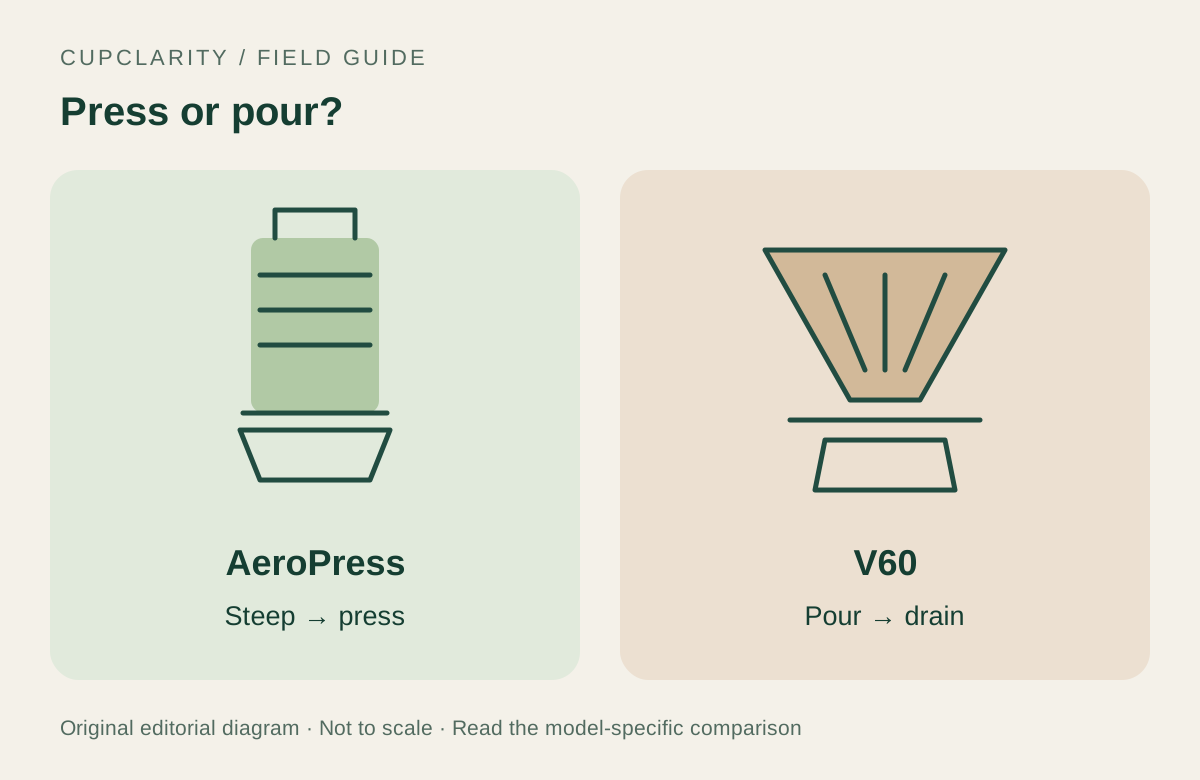
Compare pressing and pouring by the steps you perform, the servings you need and the cleanup you will repeat every day.
 CupClarityMy notebook ↗
Find coffee comparisons and brewing guides by model, method or question. Save your shortlist and use practical dose and cost calculators.
Search all guides ↓Start with the task you want to change: pressing, pouring or grinding. Compare serving requirements before comparing accessory bundles.
Measure the dose you use and the drink quantity you need. Keep input water and finished drink separate when comparing recipes.
Keep a baseline and change one quantity at a time. Record what you liked so the next adjustment has a useful starting point.
Search a model, brewing method or problem. Save useful guides to a shortlist on this browser; no account needed.
38 guides
Compare pressing and pouring by the steps you perform, the servings you need and the cleanup you will repeat every day.
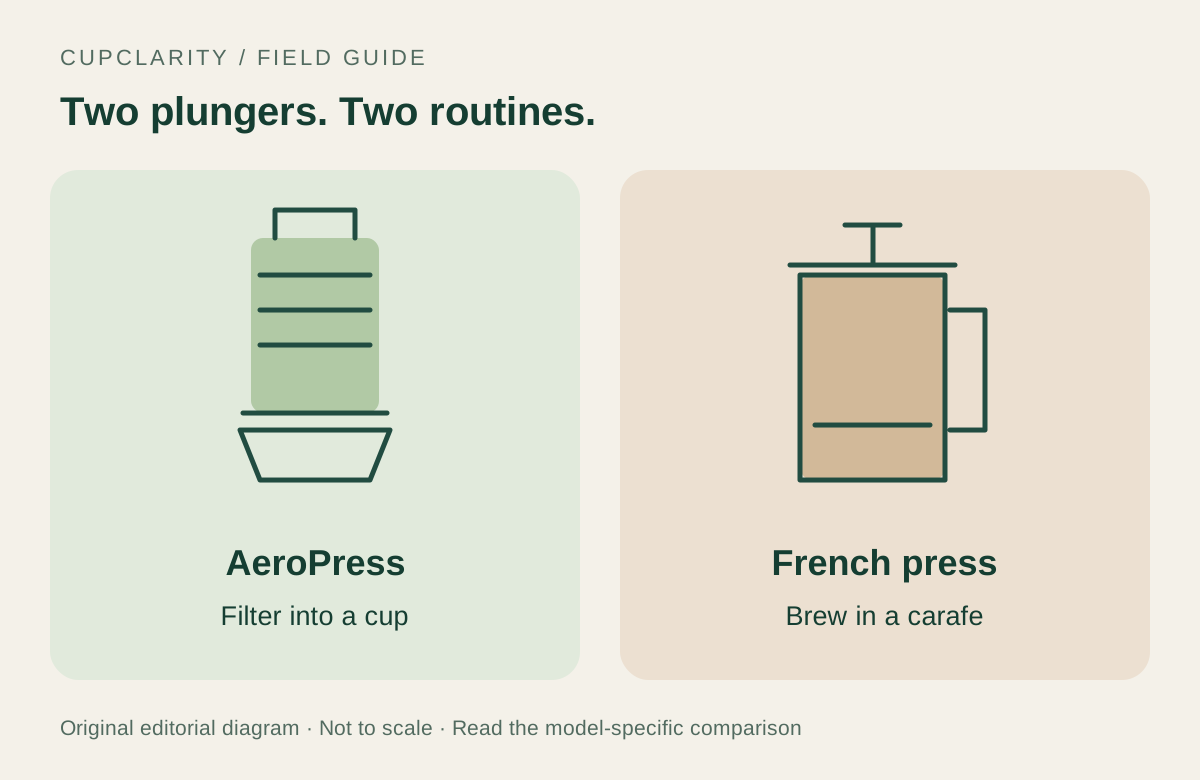
Both use immersion, but the filter, pressing step and serving routine differ. Compare the complete breakfast workflow before replacing a brewer.
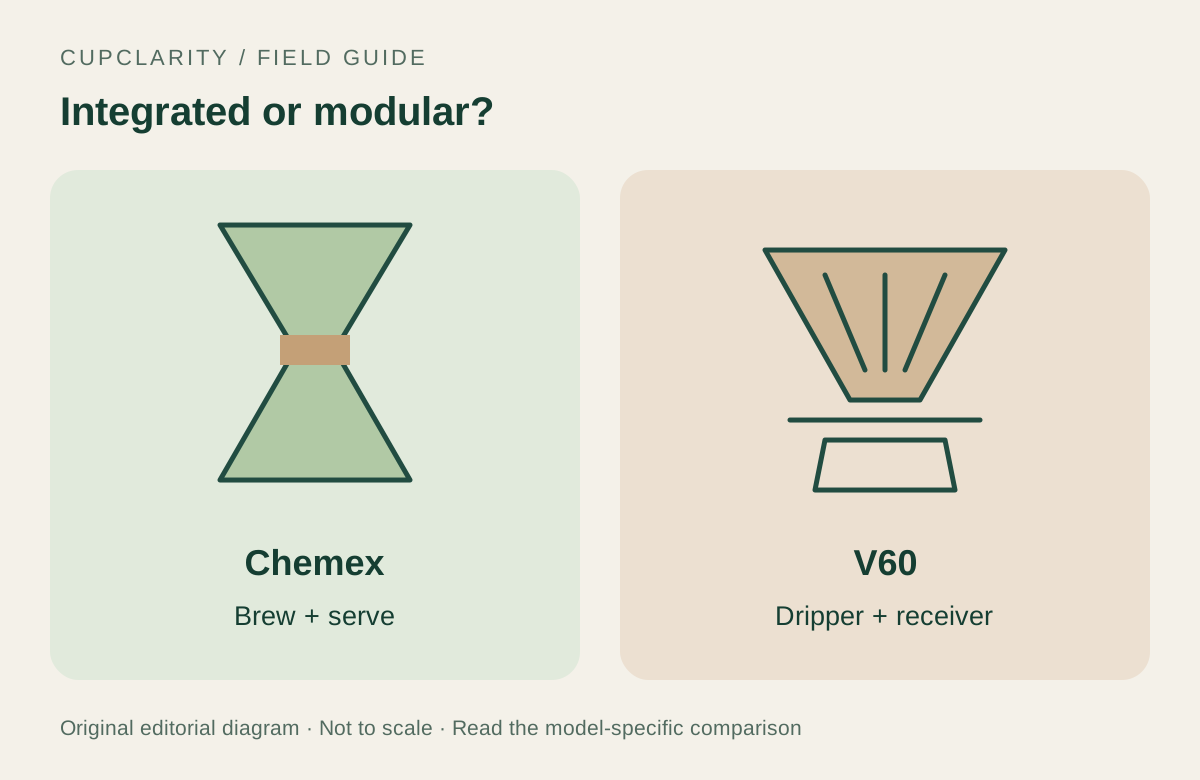
Look beyond the glass silhouette: compare the paper system, vessel arrangement, cleanup and the cost of your actual brewing routine.
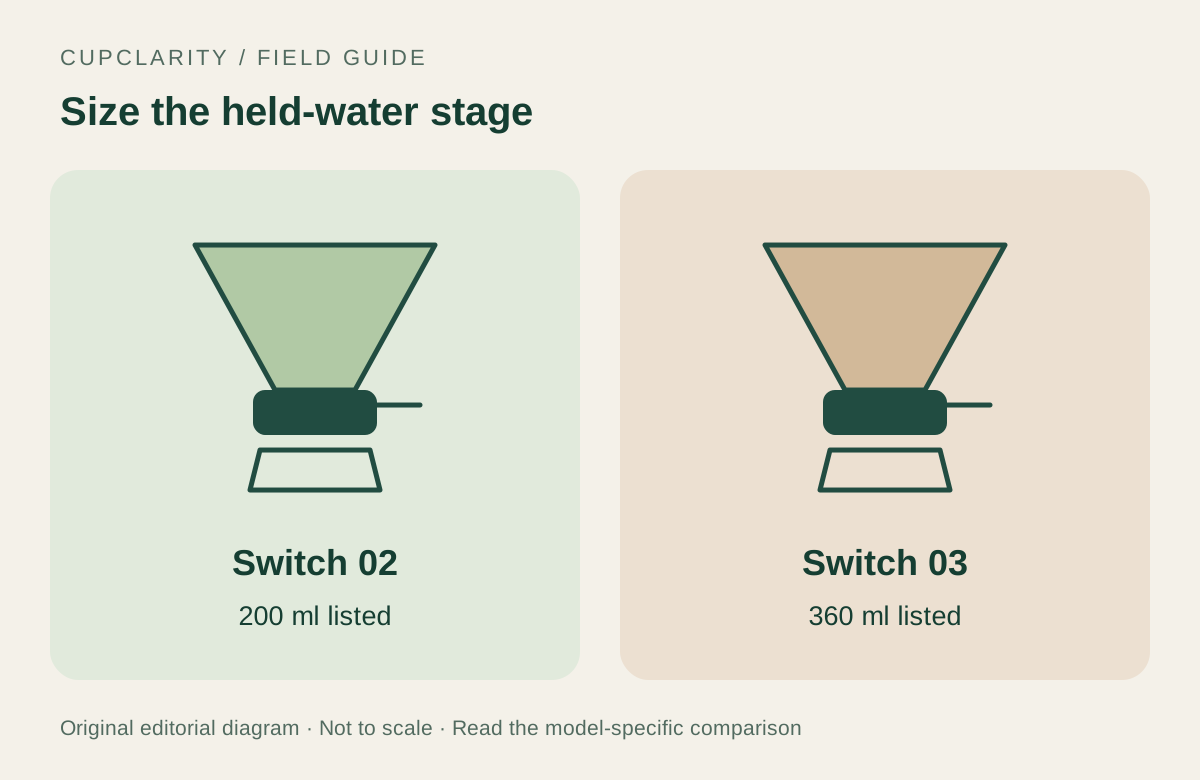
Check the glass Switch model numbers, listed capacities and matching filters, then separate a held immersion stage from the total water in a hybrid recipe.
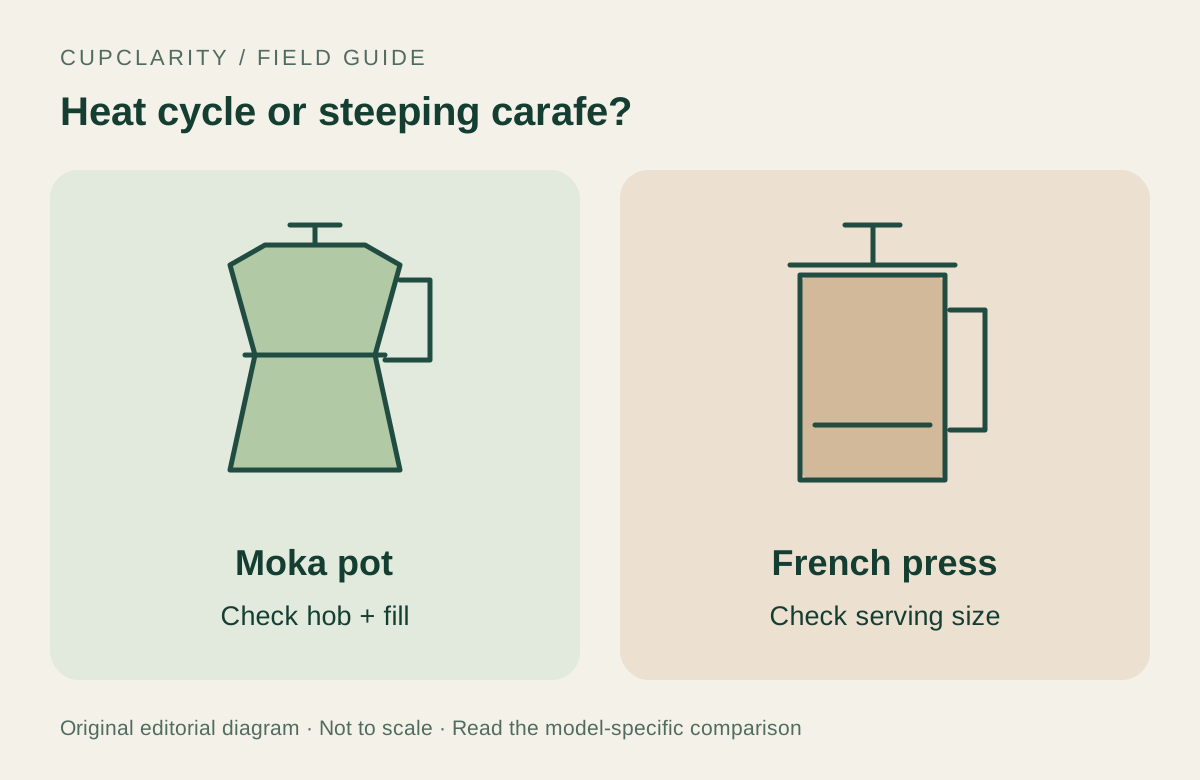
Compare a stovetop brewing cycle with a steep-and-pour carafe. Start with the drink you want, then check heat compatibility, batch size and cleaning.
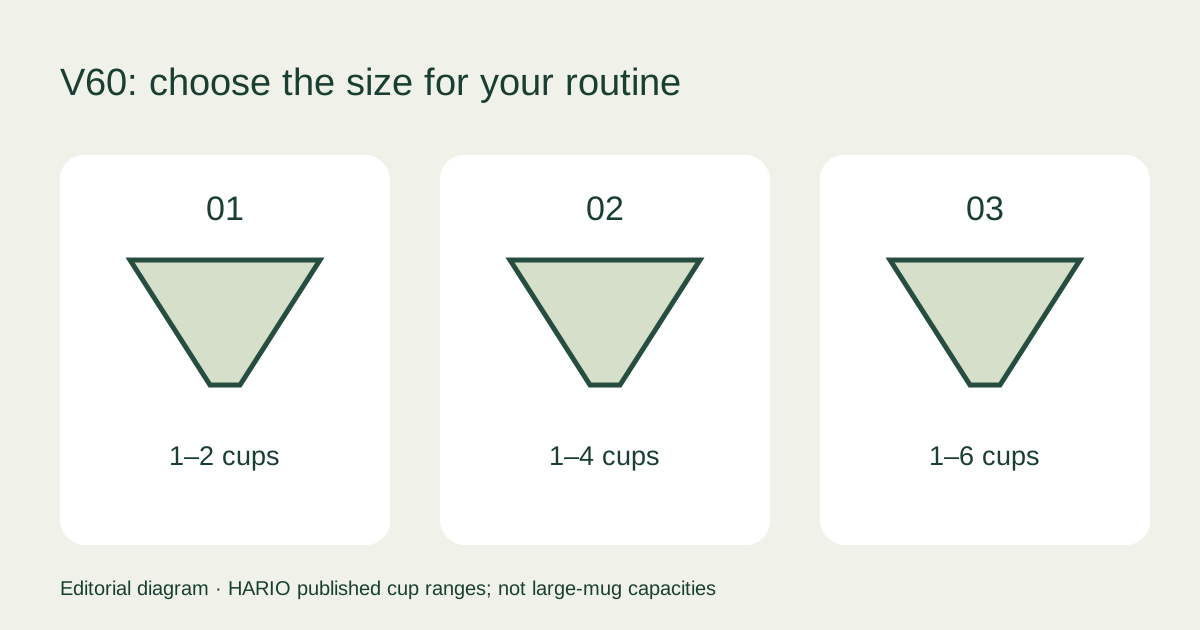
Compare the three V60 sizes by your actual brew volume, filter supply and serving routine—not just the number of cups on the box.
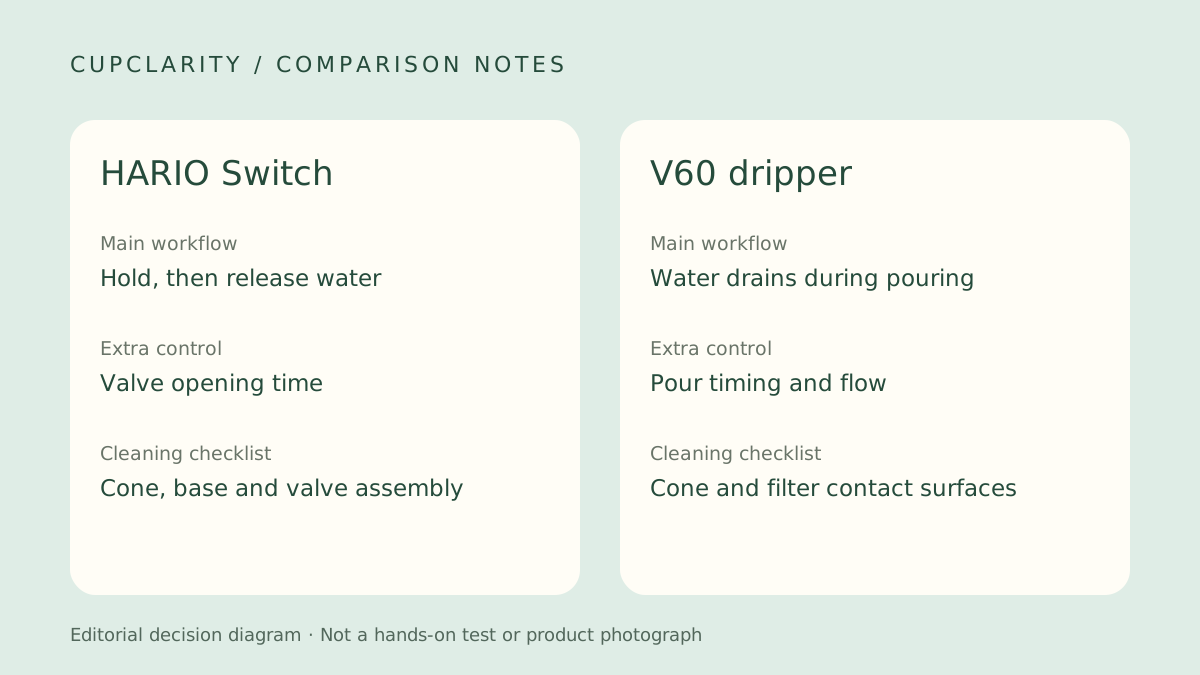
Compare valve control, batch planning, cleanup and recipe repeatability before choosing a daily dripper.
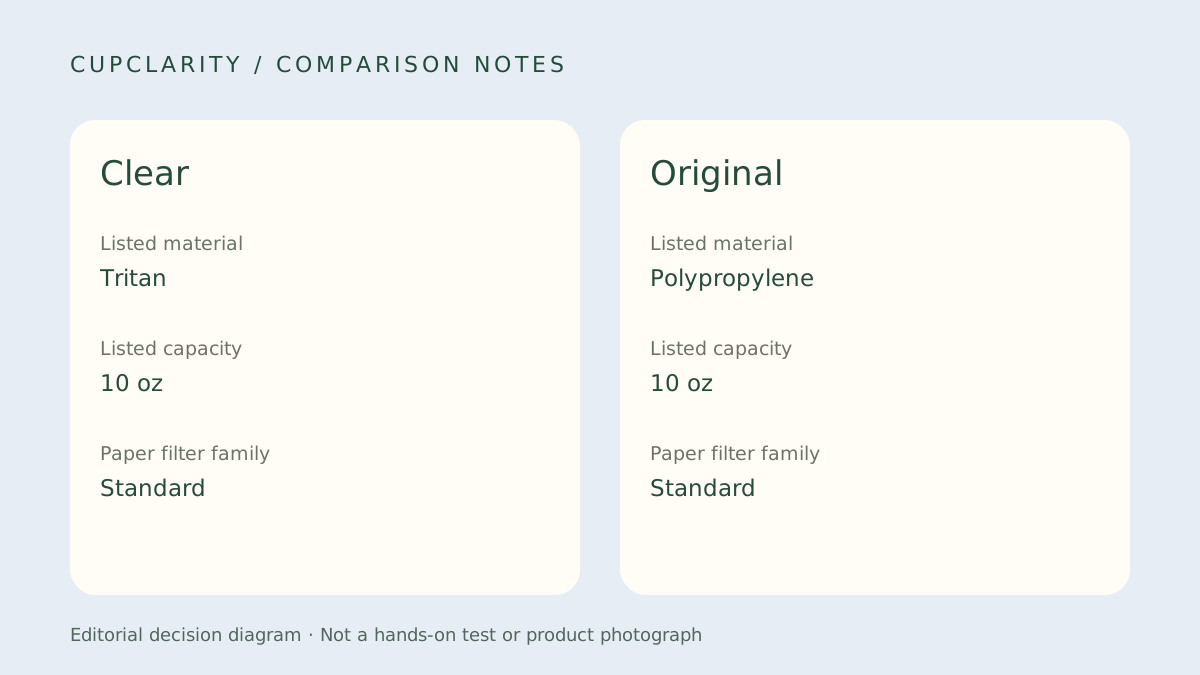
Separate visibility and material preferences from brewing capacity, filter compatibility and the cost of replacing a working brewer.
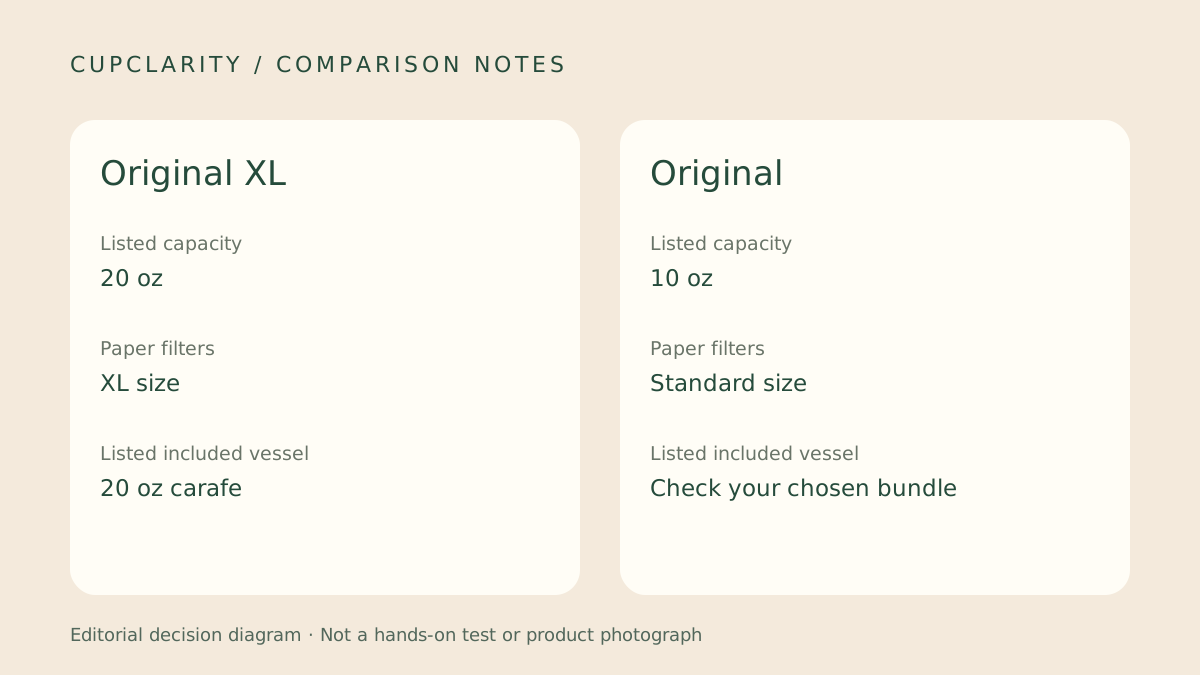
Compare one larger batch with repeated single servings, including filters, serving size, workspace and cleanup.
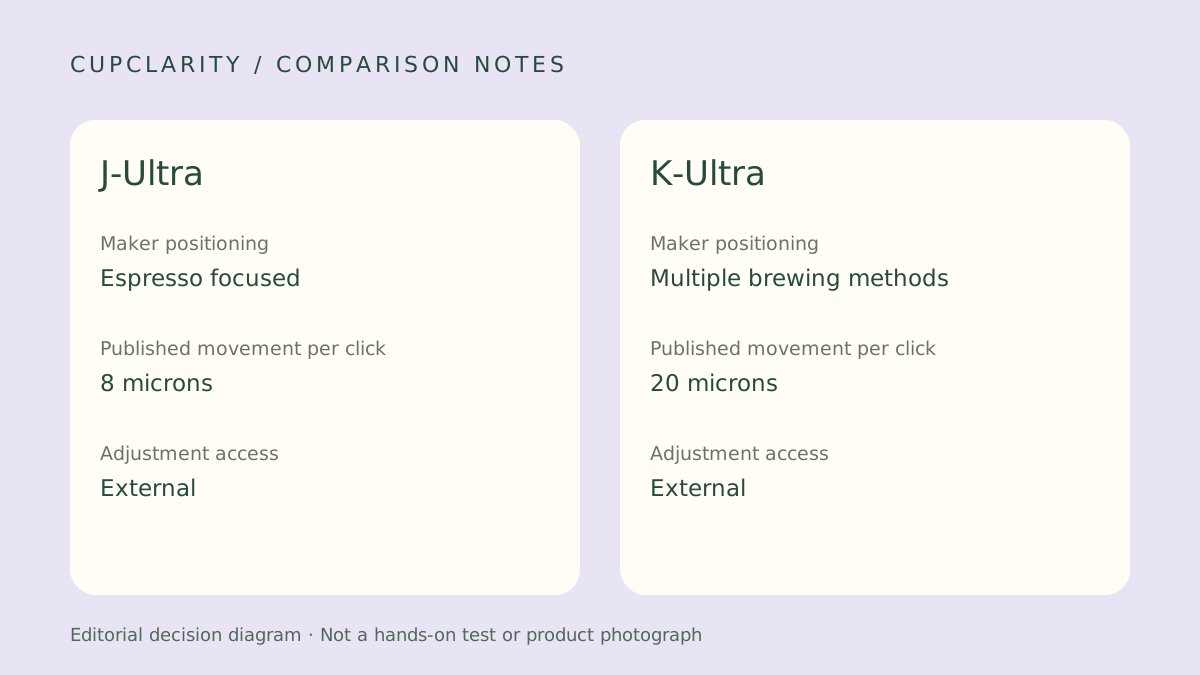
Understand adjustment increments, changing brew methods and the limits of comparing grinders from specifications alone.
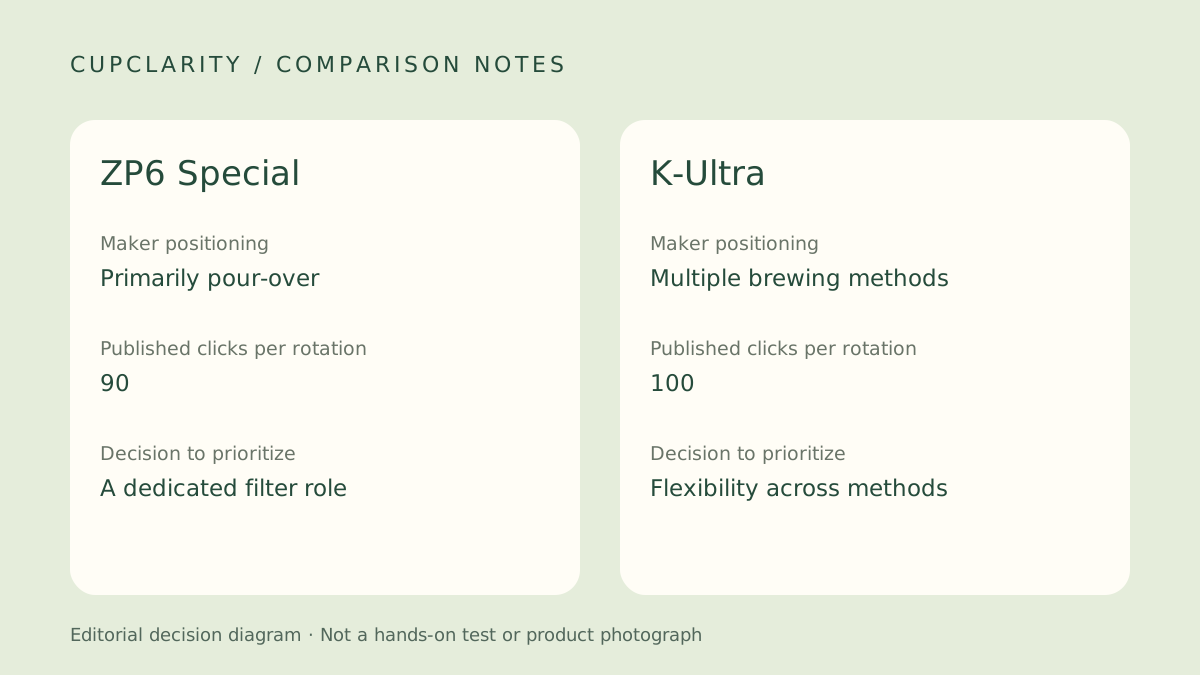
Choose between a filter-focused setup and a broader brewing role without mistaking clarity claims for your own taste preference.
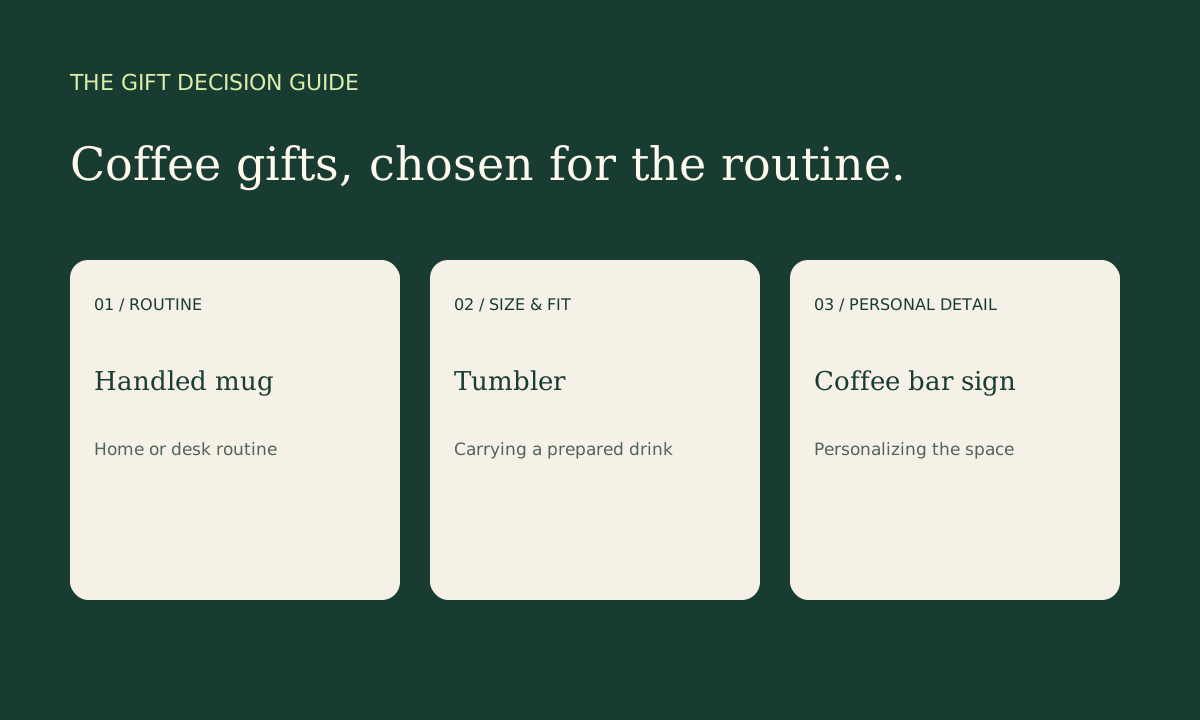
Choose a useful coffee gift by routine, usable capacity and personalization—not just a name printed on the front.
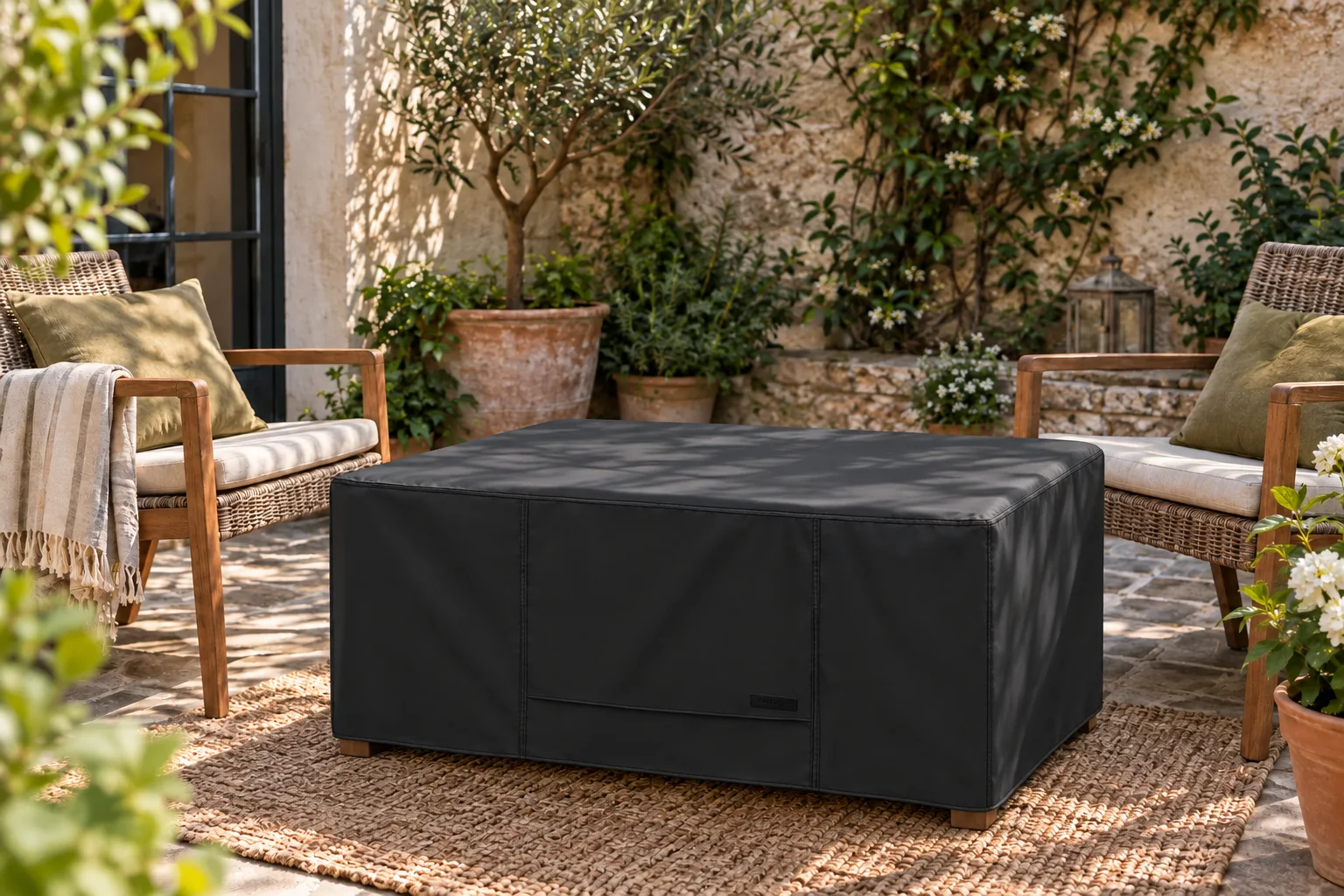
Plan a courtyard coffee corner, measure the furniture you actually cover, and compare shape, height and everyday storage before choosing a cover.
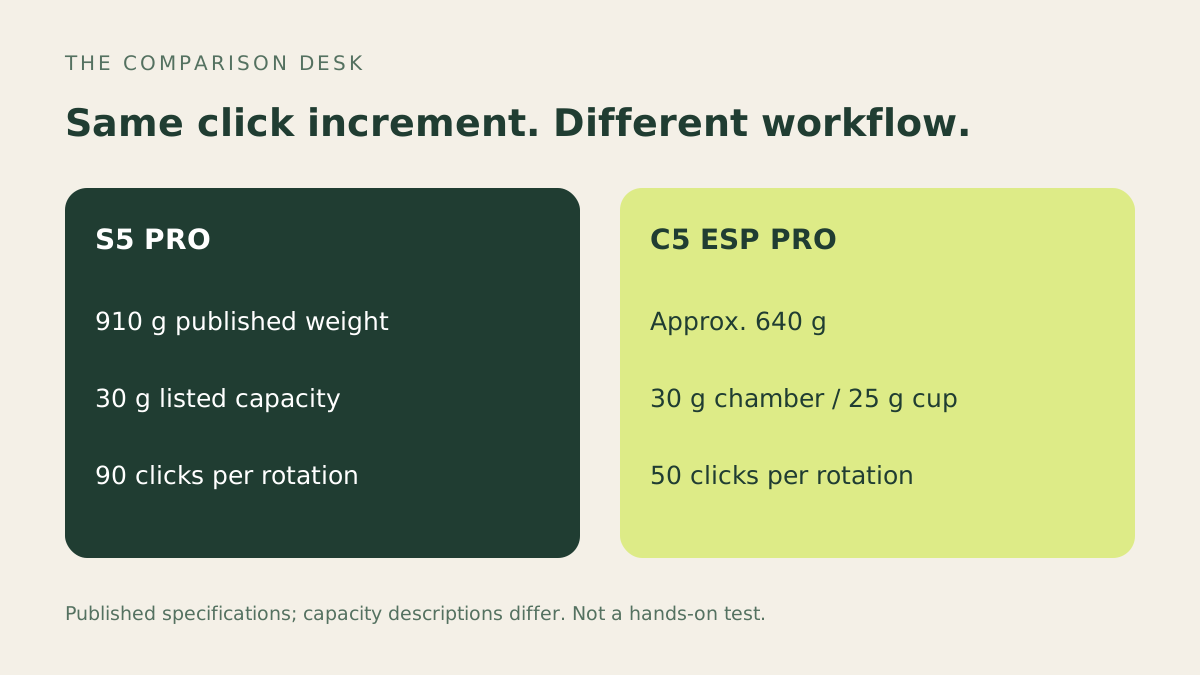
Compare the same-brand hand grinders by practical differences: 15-micron adjustment, packed weight, usable capacity and the evidence needed to justify an upgrade.
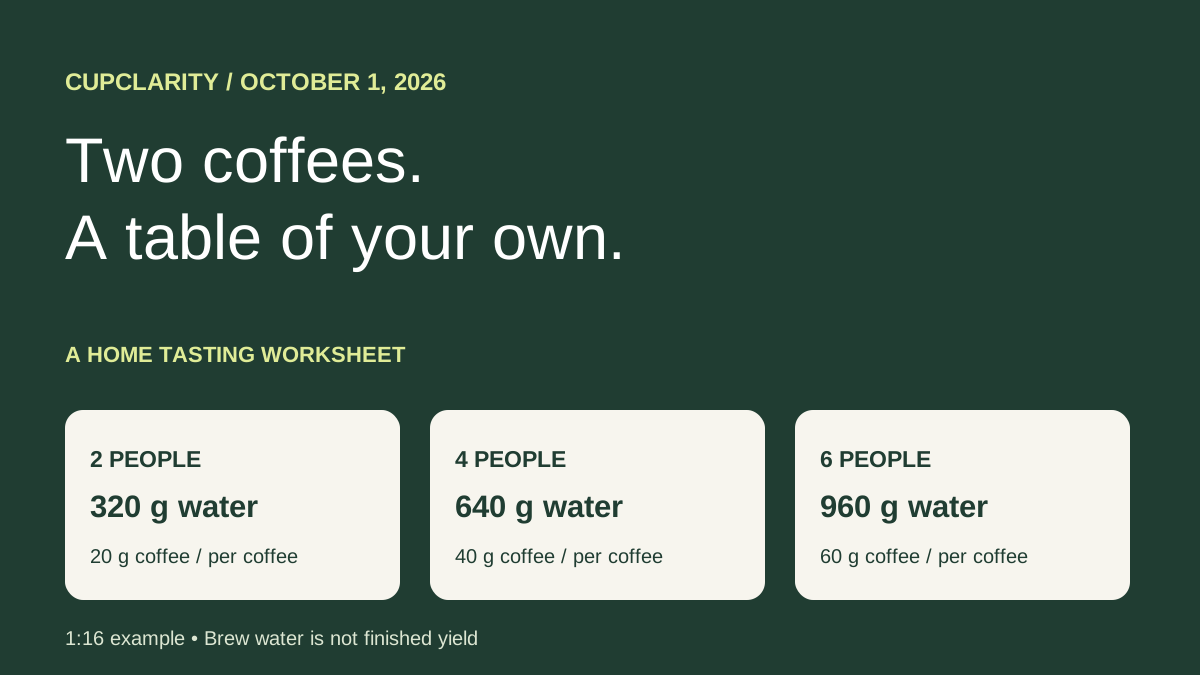
A small tasting for October 1, with a practical water-and-coffee worksheet, a repeatable serving plan and a downloadable ratio card.
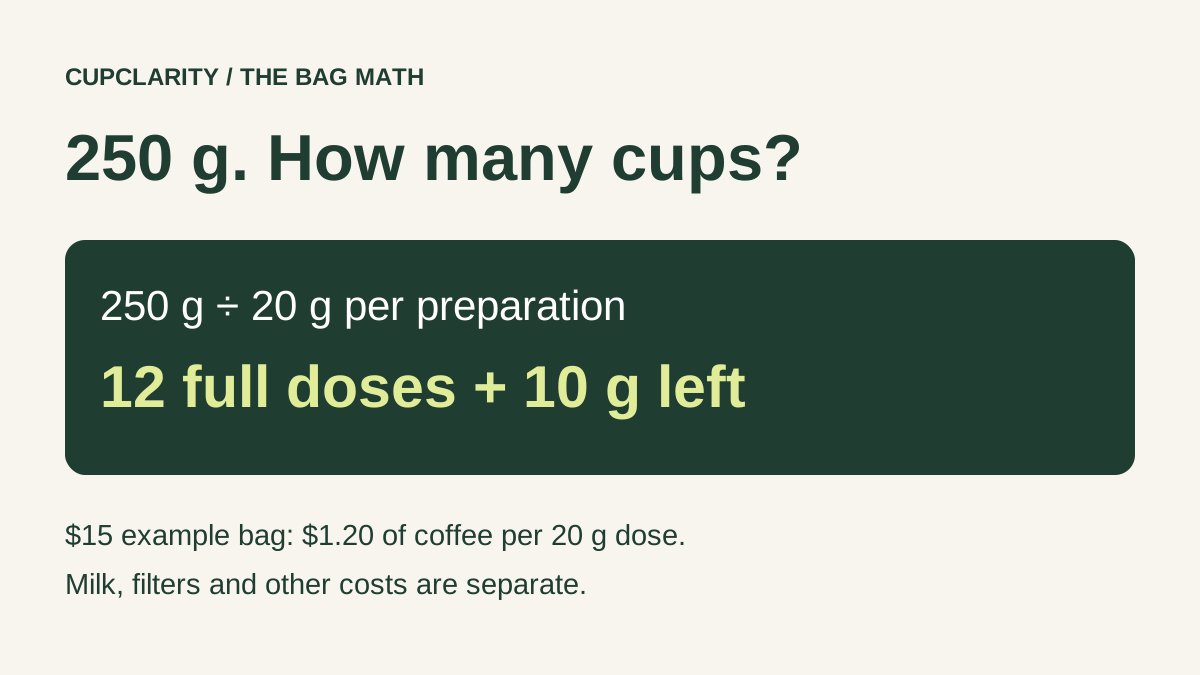
250g of coffee beans makes 16 cups at 15g, 13 at 18g, or 12 at 20g per brew. Compare espresso and filter servings, leftovers and cost with the calculator.
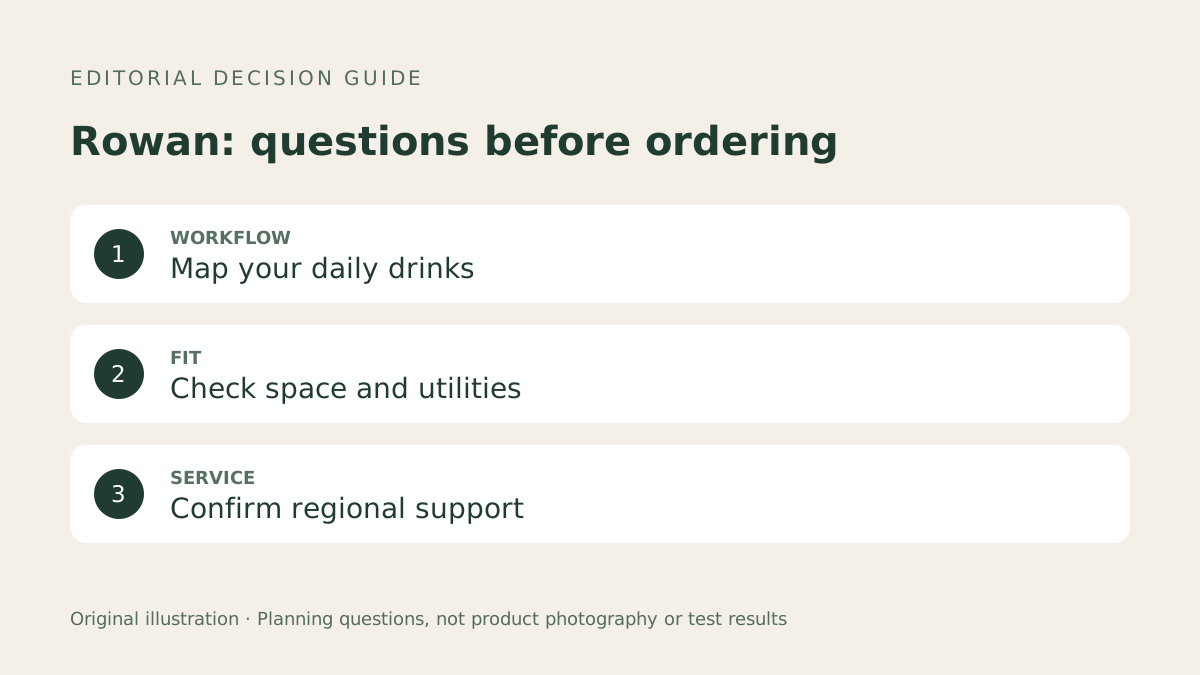
A September launch with integrated grinding and tamping. Separate the useful workflow questions from the under-a-minute headline.
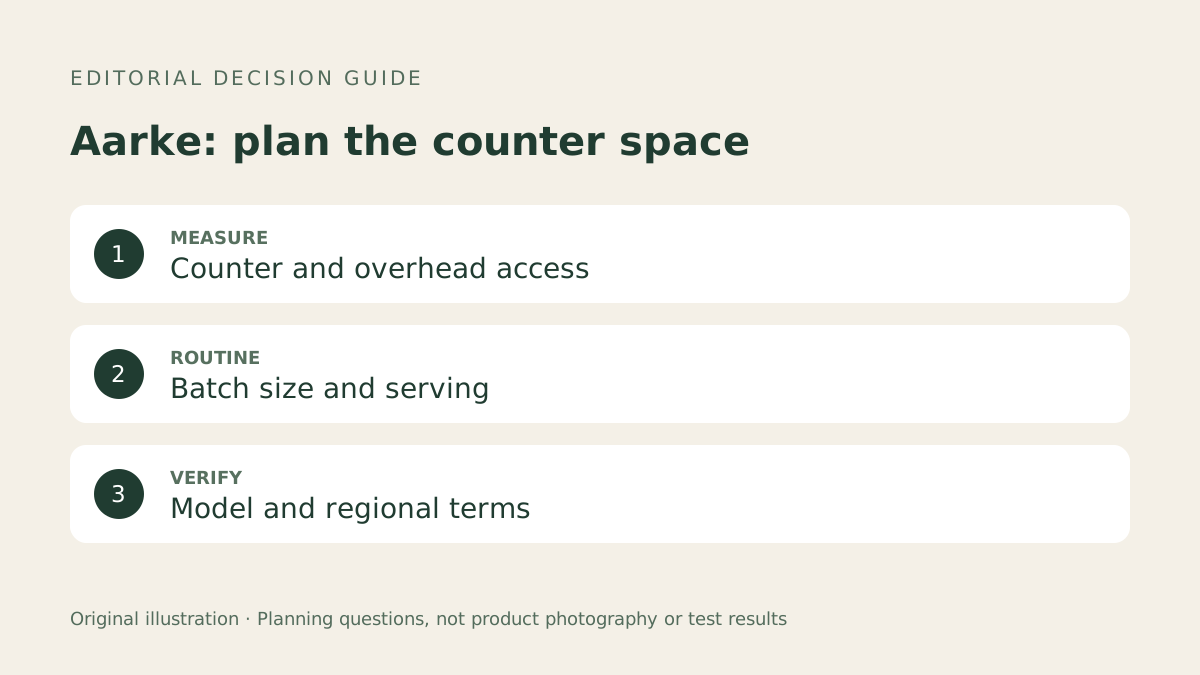
A fresh finish is a good reason to revisit the practical details: your mug size, regional voltage, filter supply and space for daily handling.
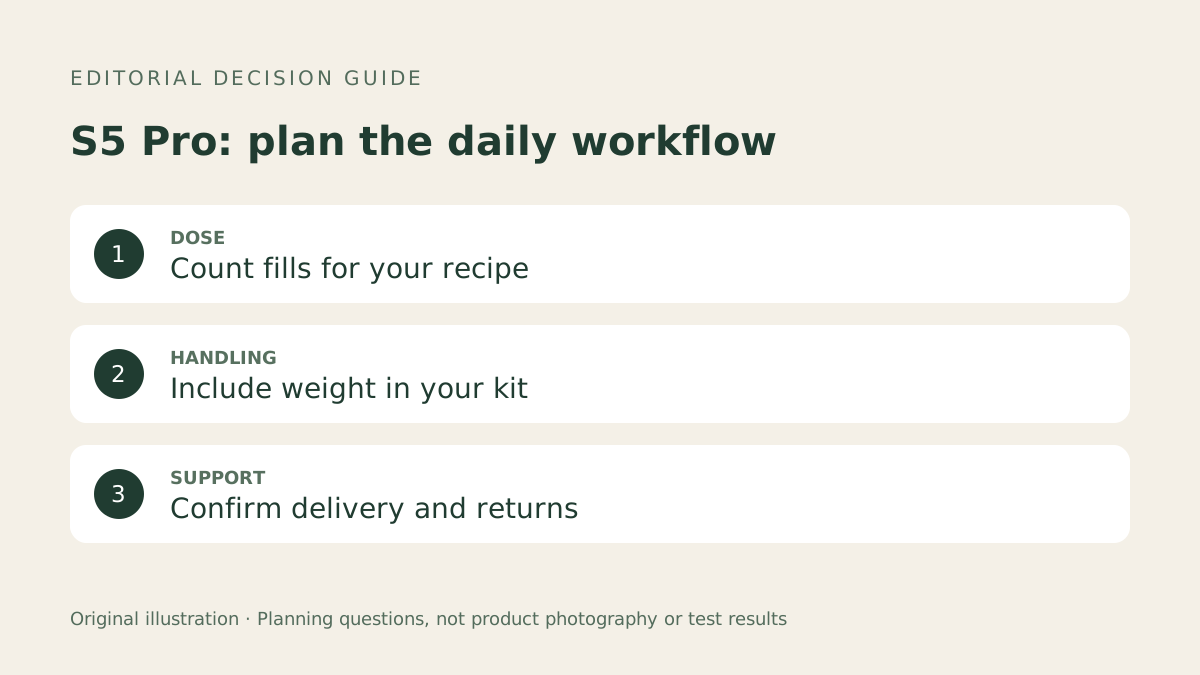
Check the S5 Pro’s 48 mm burr, external adjustment, 910 g weight and 30 g stated capacity. Includes a seller checklist and comparison with C5 ESP Pro.
Read the detailed load table before treating a 0.1 g headline as a guarantee across a full pour-over setup.
Separate Encore ESP from ESP Pro, choose a documented starting range and record the changes that make a recipe repeatable.
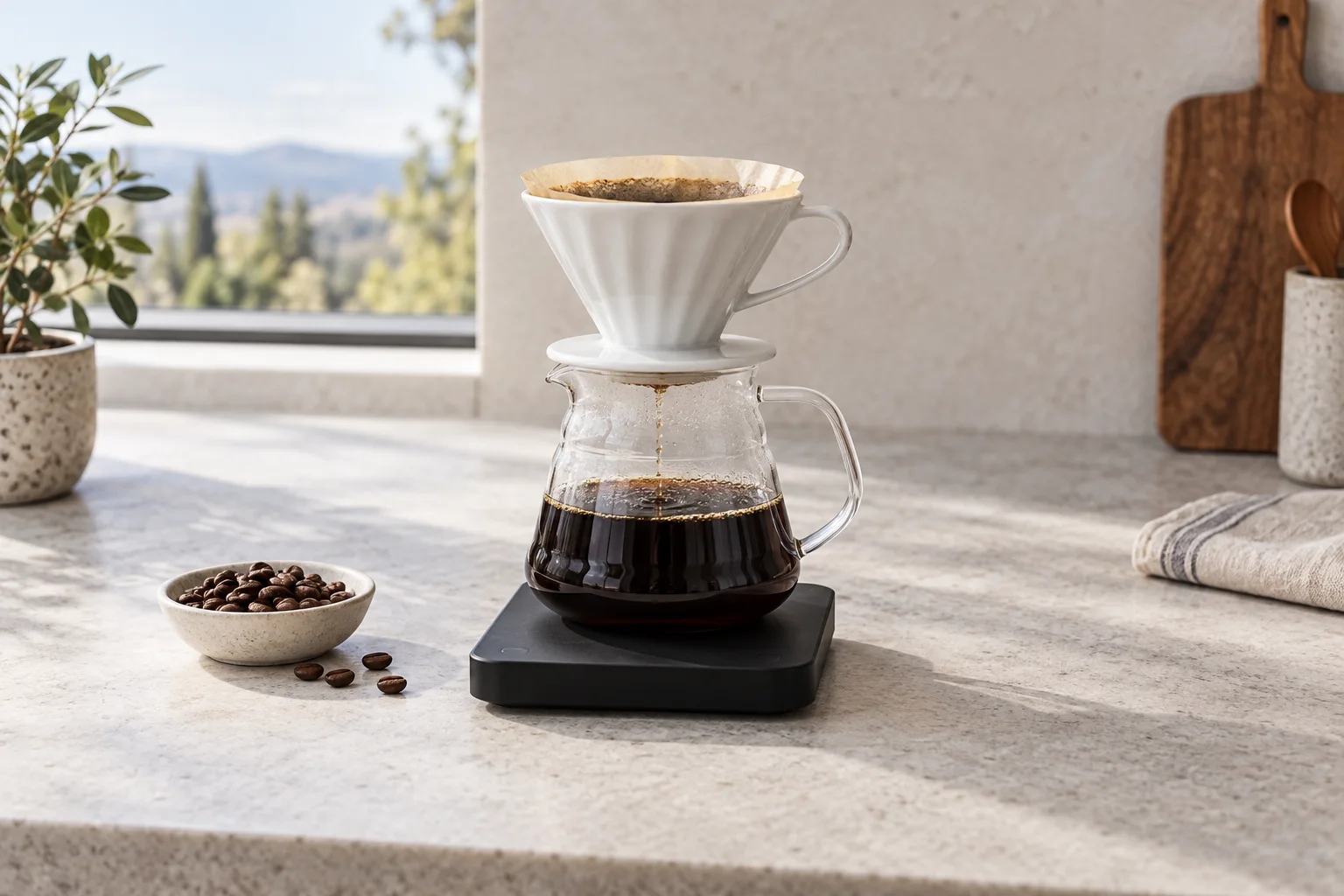
Use a worked load calculation to decide what a scale needs to measure before comparing features.
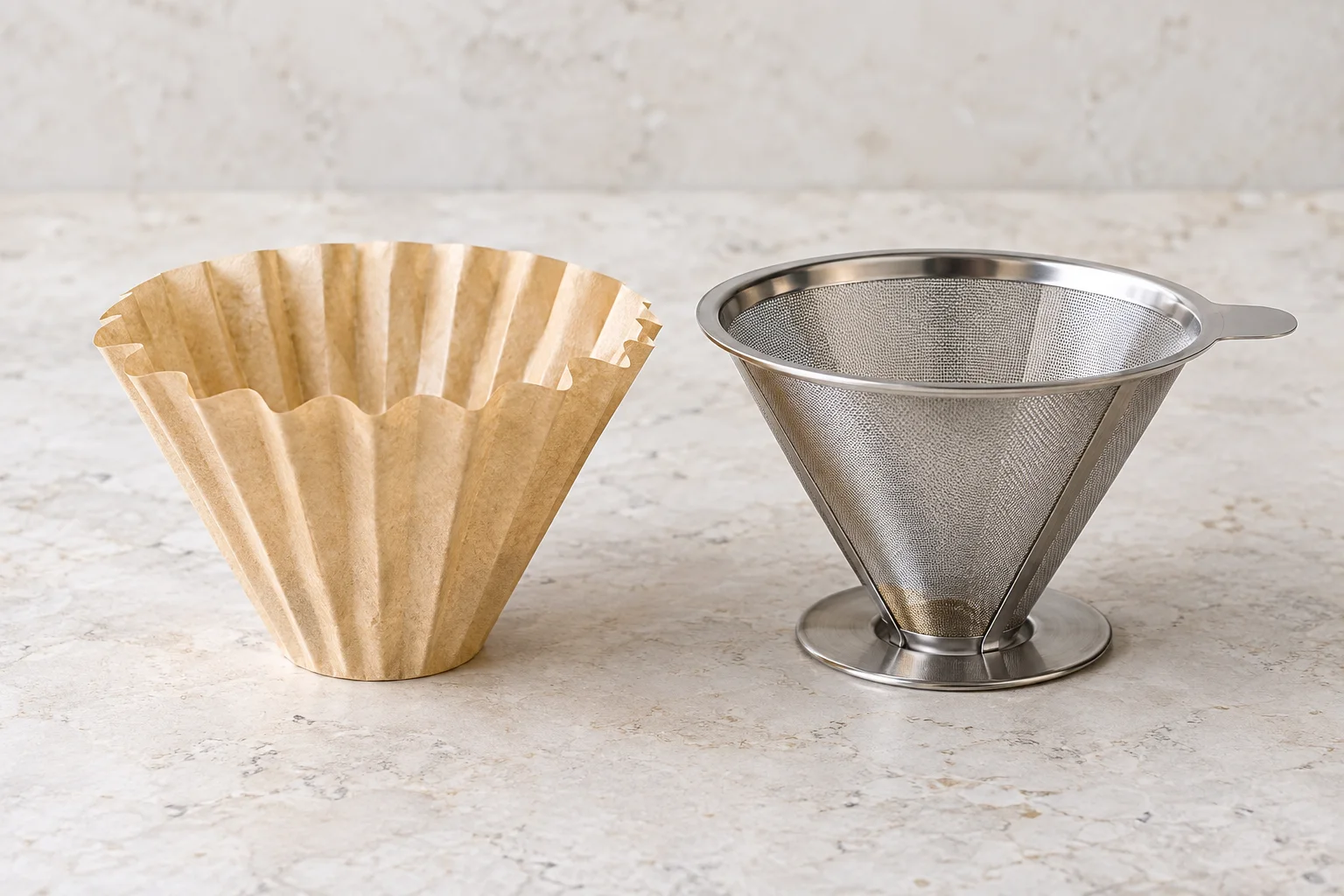
Check shape, size and seating before treating slow drainage as a grinder problem.
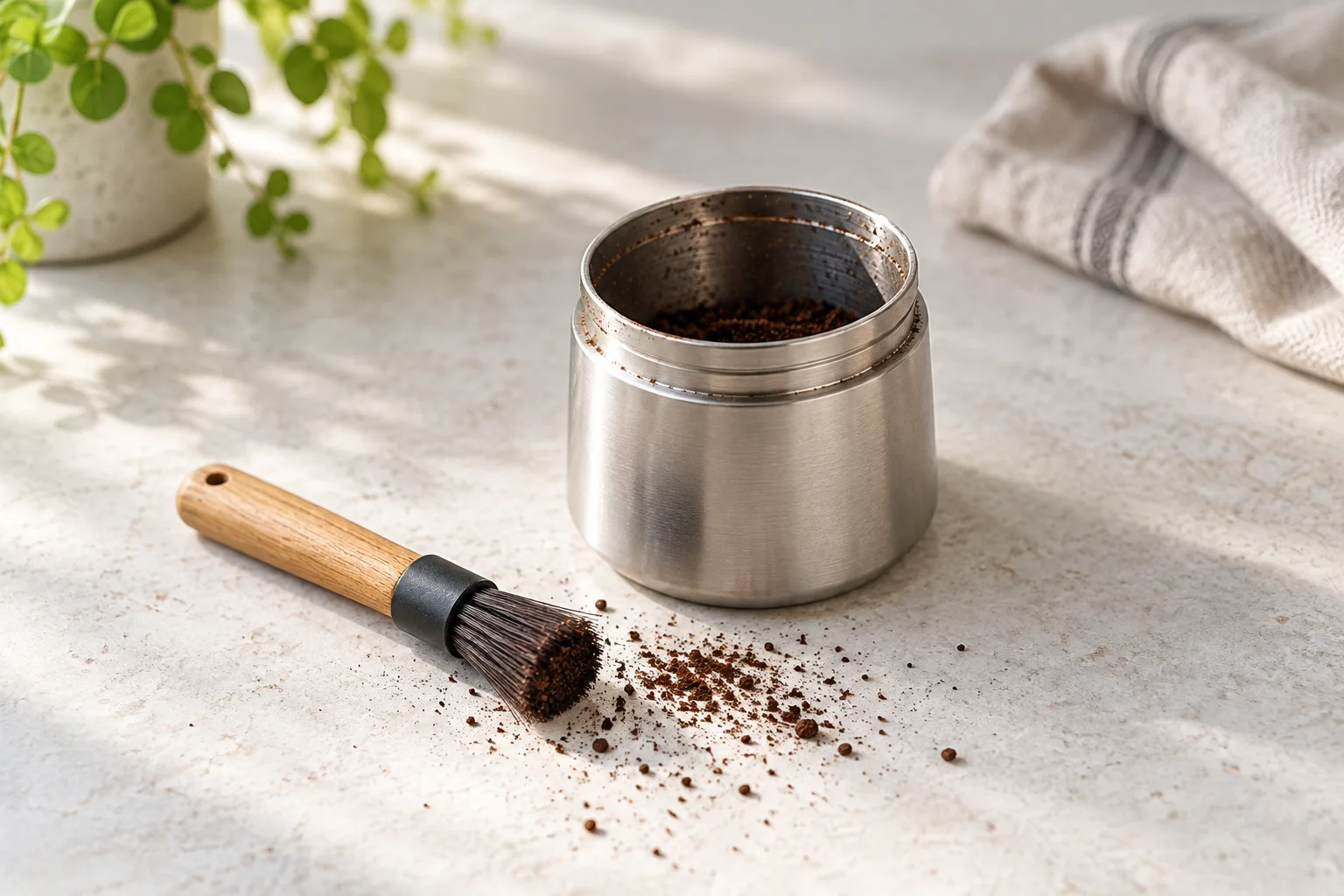
Why a cleaning shortcut can create a different problem, and how to check the method for your grinder.
Keep model numbers, care instructions and useful observations together instead of guessing a universal schedule.
Check the whole scale, cup clearance and capacity before choosing this compact espresso scale.
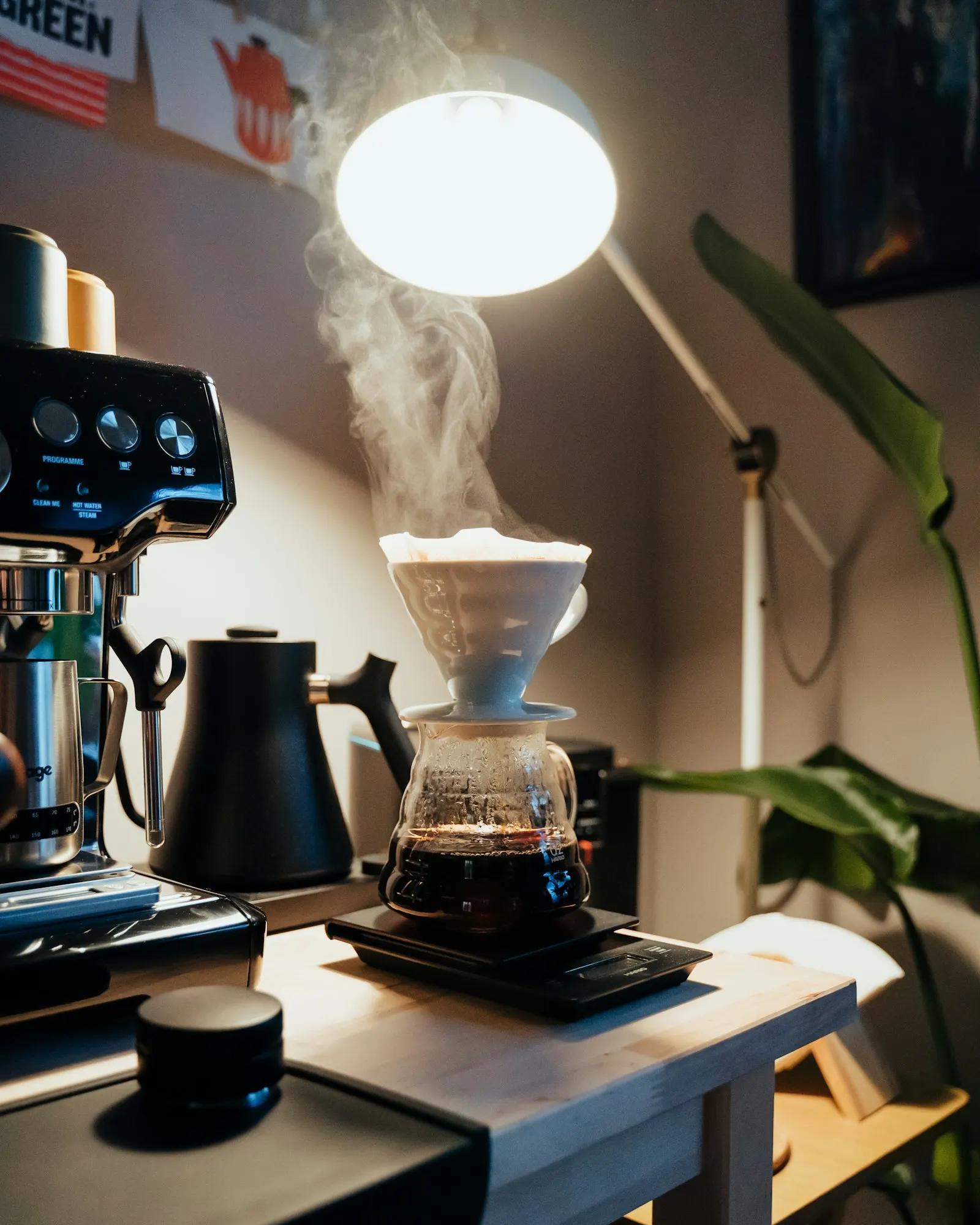
Understand the 12-cup listing, serving capacity and ownership questions before choosing an APOXCON coffee pot.
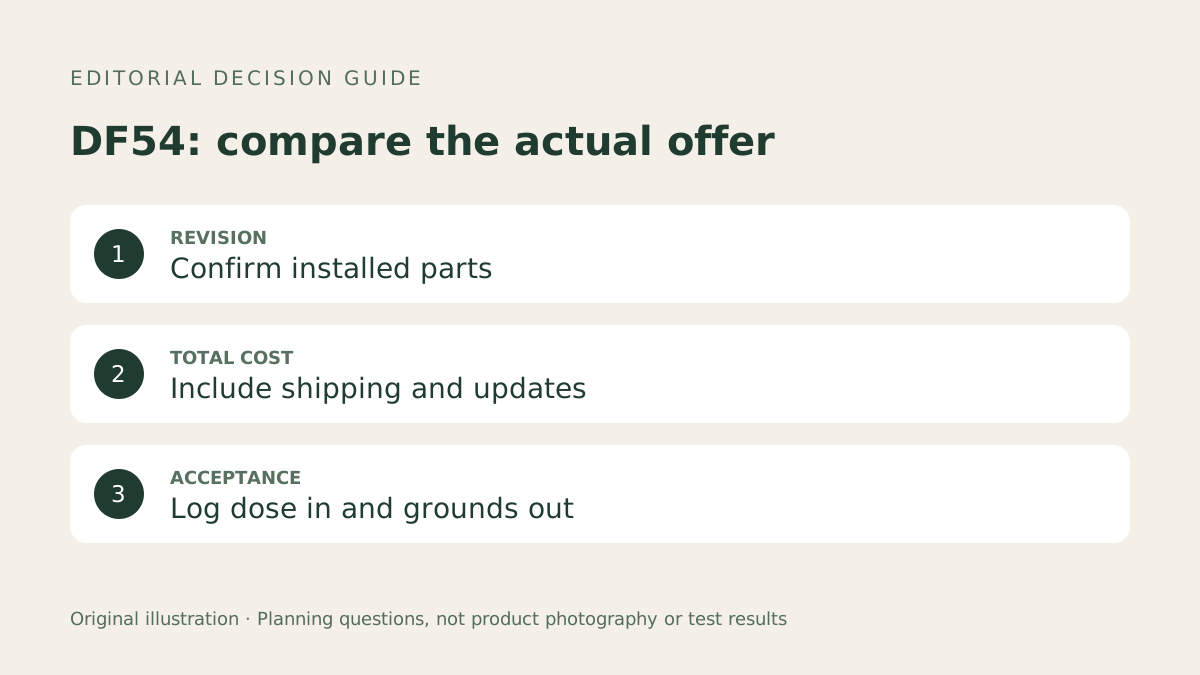
Compare revision history, calculate the real cost of older stock and use a repeatable dose log instead of judging retention from one grind.
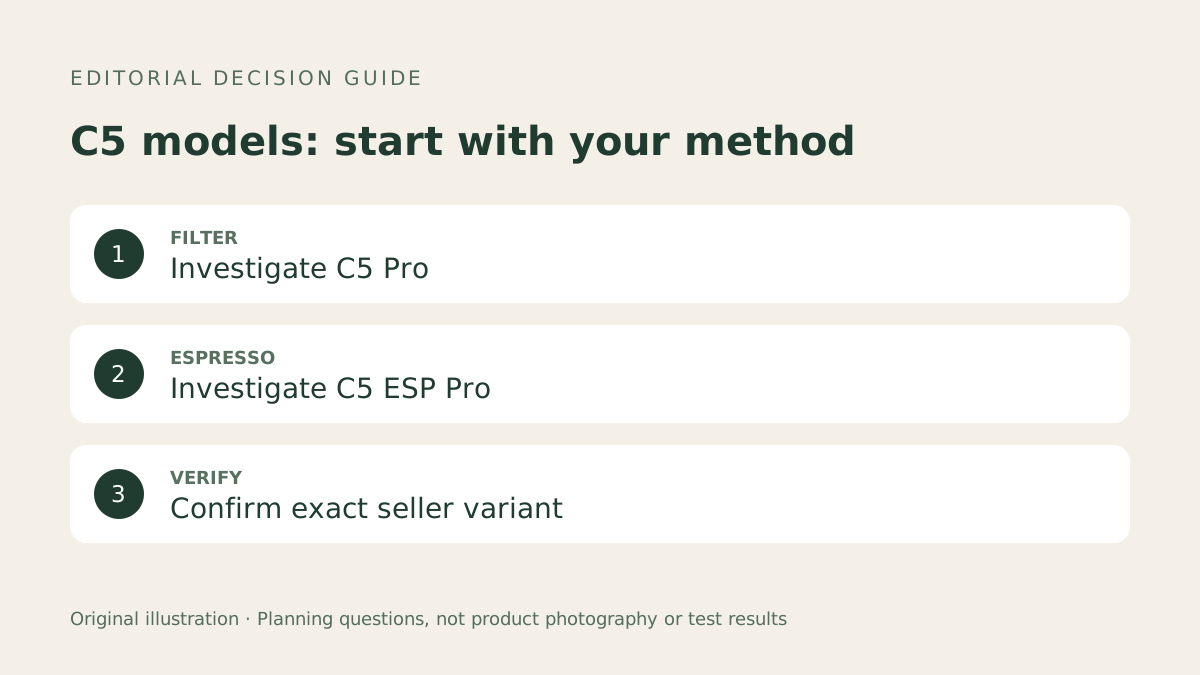
31 vs 15 microns per click, the same listed burr and a 25 g catch cup: compare the C5 models for filter coffee, espresso and daily handling.
Clarity or a fuller body? A little ritual or a simpler routine? Start with the cup you actually want to drink.
The difference is about control, consistency and how you like to brew—not just the price tag.
A practical checklist for the piece of equipment you will use every morning.
Understand the trade-offs in cup texture, cleanup and everyday convenience.
Keep old grounds from taking over your next cup, without making maintenance a project.
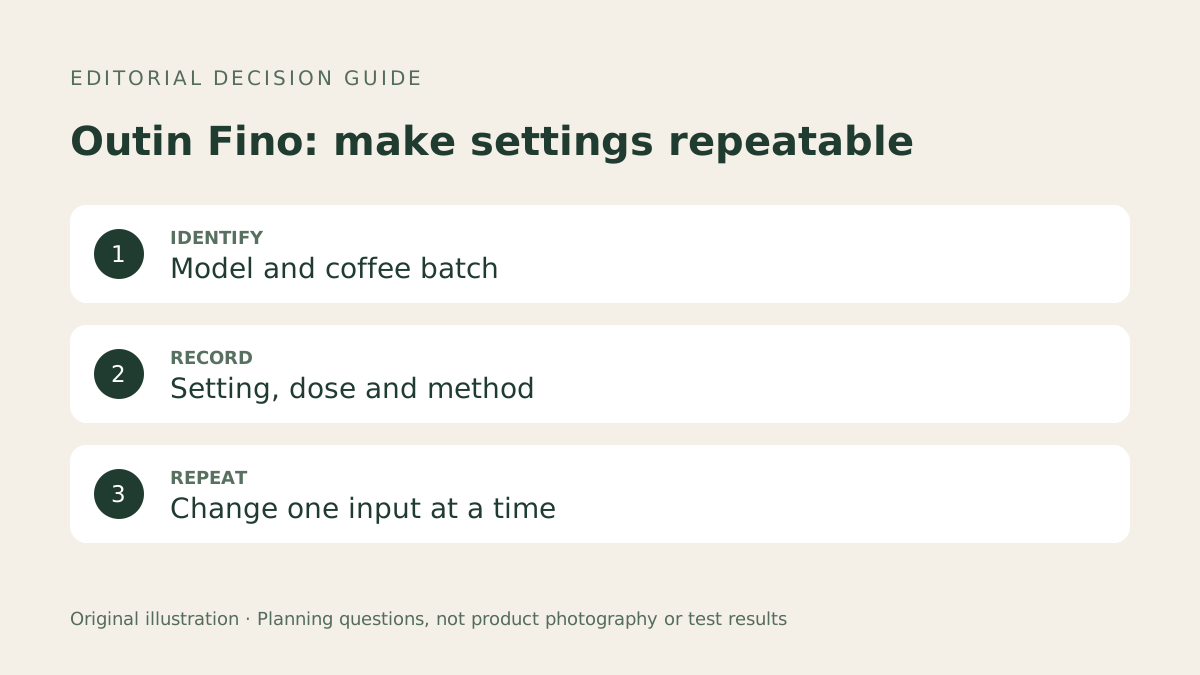
Turn the Fino’s adjustment dial into a useful brewing record, without treating an untested click chart as a guaranteed recipe.
Leave the guesswork behind. Use a repeatable starting point, then adjust to your taste.

A useful brewing note takes a minute. Record the details that help you repeat a good cup.
Turn a disappointing cup into a small, repeatable experiment.