 CupClarity
Paper vs. metal filters: a small choice with a big effect
Understand the trade-offs in cup texture, cleanup and everyday convenience.
Research-based guidance, reviewed September 21, 2026. Buying checklists and suggested comparisons are editorial guidance, not hands-on measurements. Images are illustrative. No affiliate links.
What reaches your cup?
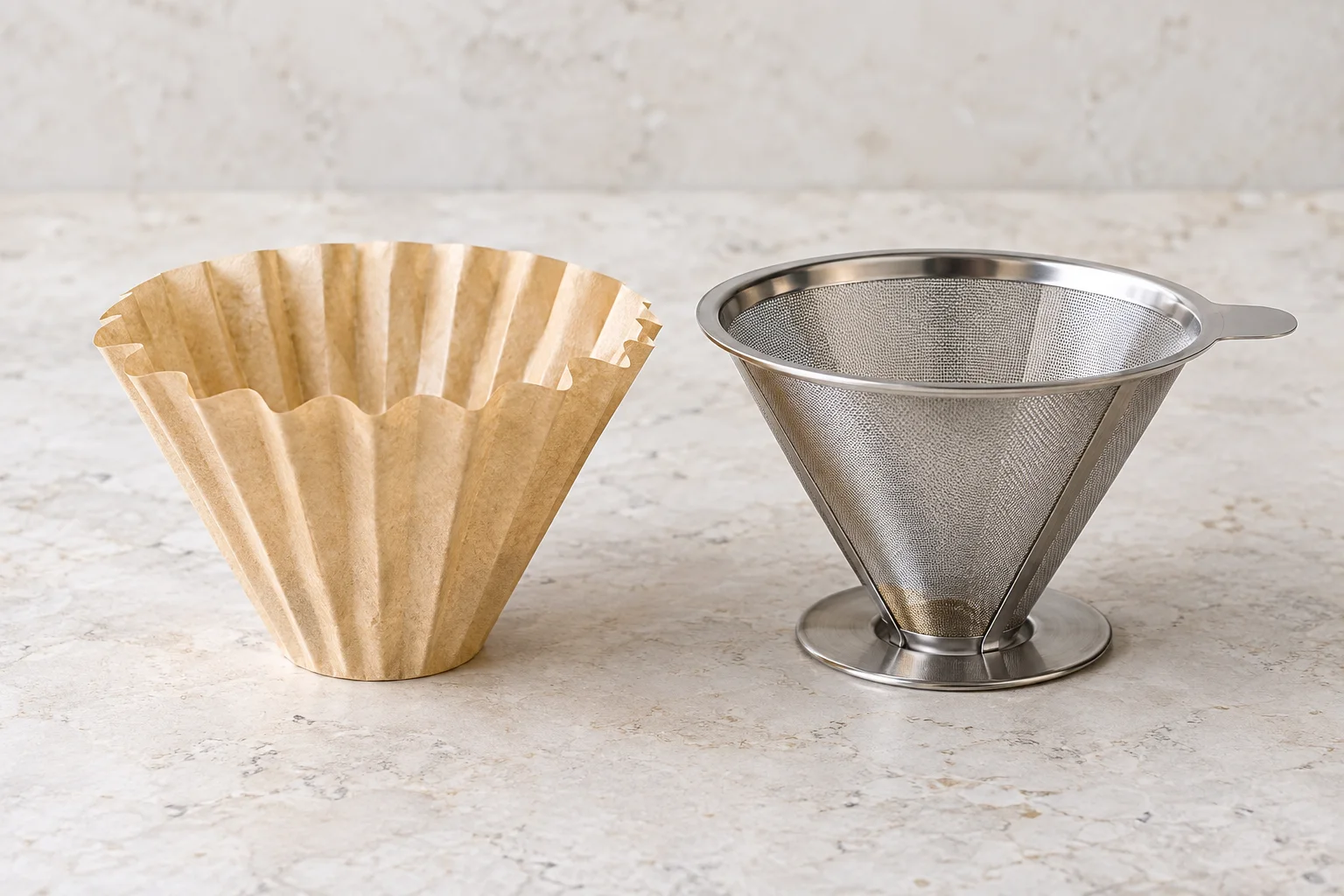
Paper and metal filters retain different amounts of fine particles and oils. Paper generally gives a clearer cup, while metal often produces a fuller texture and some sediment. The exact result depends on filter design and grind.
Match the filter to the brewer
Check the required shape and size. A filter that folds awkwardly or fits poorly can change drainage. Follow the brewer’s instructions rather than assuming all filters are interchangeable.
Factor in cleanup
Paper filters are a recurring purchase but simplify removing wet grounds. Metal filters need thorough cleaning to remove trapped residue. Compare convenience and local disposal options for your own routine.
Compare the costs with your own habits
For paper, divide the delivered pack price by the filter count, then multiply by the number of brews you actually make. For a reusable filter, include its purchase price and follow its care instructions. A hypothetical 100-filter pack used once a day lasts 100 brewing days; that is arithmetic, not a product durability claim. Avoid declaring a universal cheapest option without knowing local prices and replacement needs.
Keep the first comparison simple
Record the brewer, filter model, coffee, dose and water amount. Prepare each filter as its maker directs. Compare cup texture and the cleanup afterward, then decide whether to adjust the recipe on a later brew. If the first attempt drains differently, check seating and the recommended grind before treating that one cup as proof that the filter is poor.
A reusable filter is not automatically a drop-in replacement
Check explicit compatibility with your dripper, including shape and support at the base. Do not use force to make a filter sit or improvise a support above a hot cup. A mesh filter in a French press and a reusable insert for a pour-over cone are different designs; advice for one is not a compatibility promise for the other.
Which one should you start with?
If your brewer arrived with a recommended paper filter, use that baseline while learning the recipe. Consider a compatible reusable filter when you specifically want a different texture or prefer washing to repurchasing paper. Keep the original recipe so you can return to it. We have not measured oil retention, waste impact or filter lifespan.
How we research these guides · Find your next step

