 CupClarityOur approach
 Pour-over vs. French press: find your everyday brew
Clarity or a fuller body? A little ritual or a simpler routine? Start with the cup you actually want to drink.
| What matters | Pour-over | French press |
|---|---|---|
| Cup texture | Typically cleaner with paper filtration | More oils and fine particles with a metal filter |
| Your involvement | Active pouring during brewing | Steep, then plunge and pour |
| Daily cleanup | Discard the paper filter and rinse | Remove wet grounds and clean the mesh |
| Best fit | A clear cup and a hands-on routine | A fuller cup and a simple steeping process |
Start with the kind of cup you enjoy
Paper-filtered pour-over and a metal-filtered French press make noticeably different cups. A paper filter retains more oils and fine particles, while a press allows more of them into the drink. Think of this as a choice about texture, rather than a universal ranking of quality.
What changes in your morning routine?
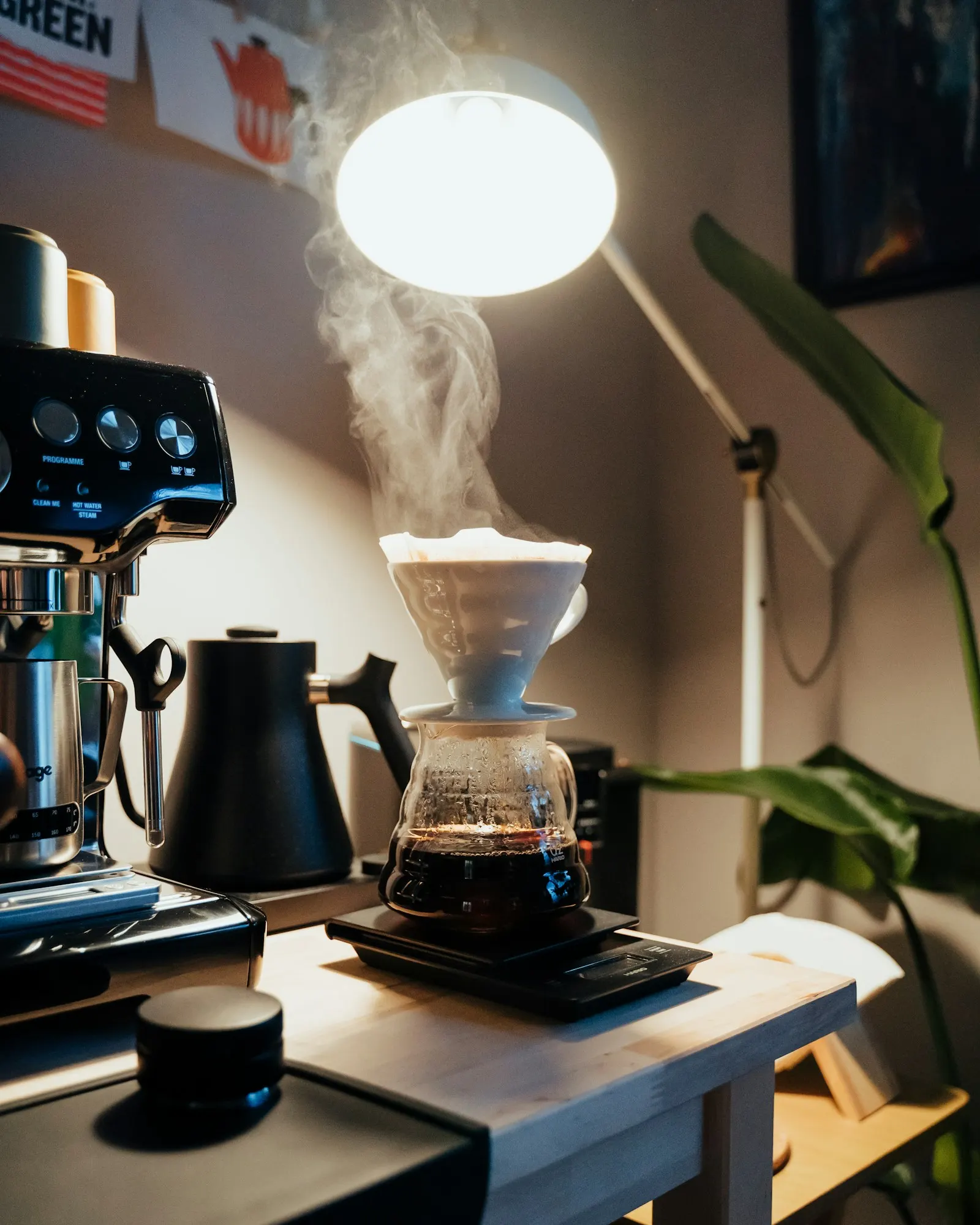
Pour-over asks you to pour water in a controlled way while the coffee drains. A French press keeps the water and grounds together during a steep. Both benefit from weighing your coffee and repeating a recipe before making adjustments.
- Choose pour-over if you enjoy an active brewing ritual and easy filter disposal.
- Choose a French press if you prefer immersion brewing and a fuller texture.
- For either method, a consistent grind is more useful than buying several brewers at once.
The equipment you actually need
A press, kettle and grinder can cover a French press routine. Pour-over also needs a dripper and matching filters; a controlled-pour kettle can make pouring easier. A scale helps with repeatability for both. Check the brewer capacity against the amount you normally drink.
Our take
For a cleaner cup and a short hands-on ritual, start with a paper-filtered pour-over. For a heavier texture and straightforward steeping, start with a French press. This is a comparison of brewing methods, not a hands-on ranking of specific products.