 CupClarityOur approach
 Coffee scales: capacity, resolution and accuracy are different
Use a worked load calculation to decide what a scale needs to measure before comparing features.
This is a research-based explainer, not a hands-on test. Source recipes are attributed; worksheets, examples and suggested comparisons are our editorial guidance. No affiliate links.
| Example load | Mass |
|---|---|
| Empty server | 420 g |
| Brewer | 180 g |
| Dry coffee | 20 g |
| Brewing water | 320 g |
| Total load before subtracting losses | 940 g |
Start with the load, not the price
A scale has two jobs in a coffee routine: supporting everything placed on it and showing a useful change in weight. A small display increment does not mean the scale can support a heavy brewer. Conversely, a large capacity says nothing about how quickly the reading responds. List the objects in your normal setup before comparing specifications.
Tare does not increase capacity
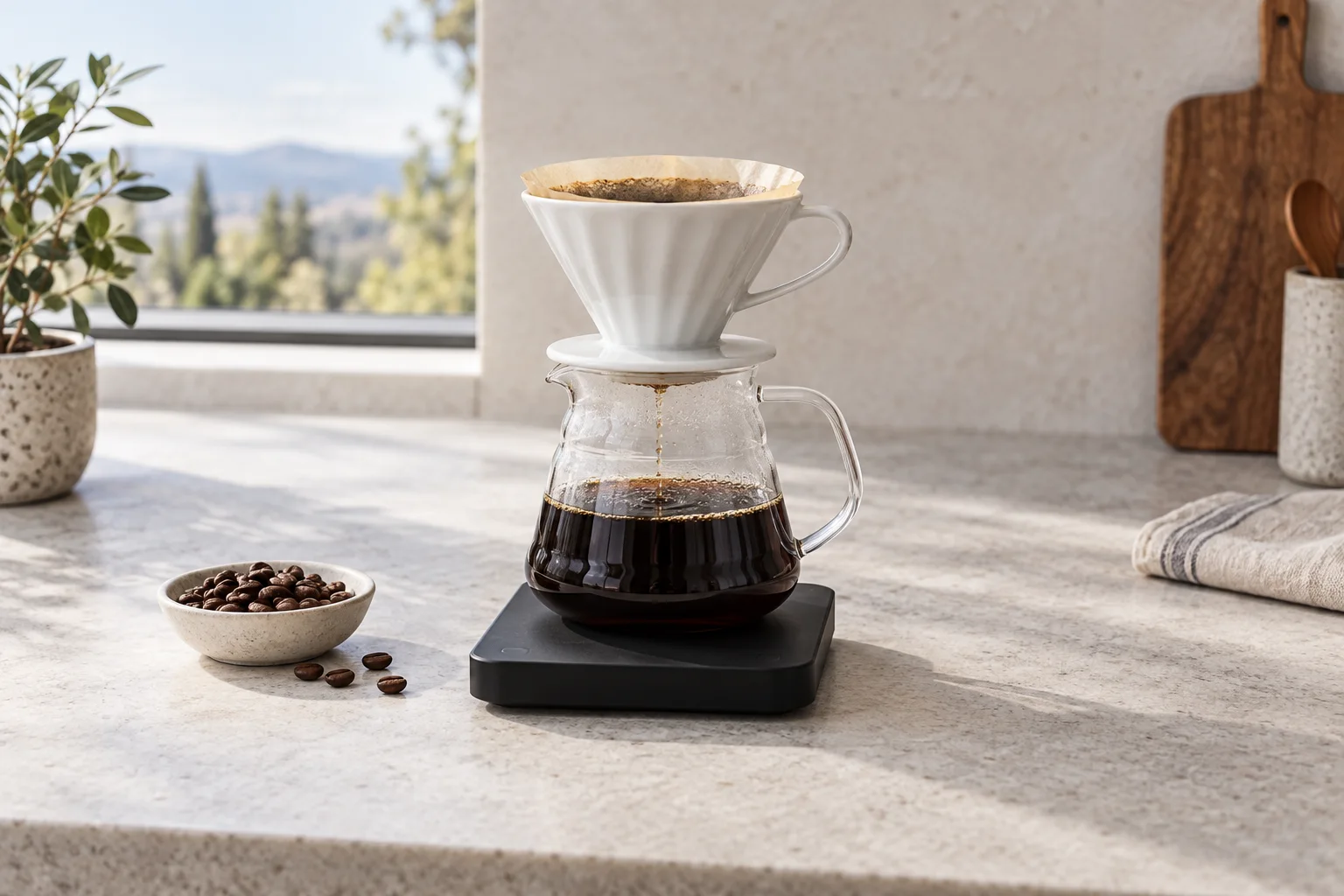
Imagine a server weighing 420 g, a brewer weighing 180 g, 20 g of dry coffee and 320 g of water added during brewing. Together those loads are 940 g. This is an illustrative calculation, not a measured product setup. On a scale rated to 1,000 g, it leaves only 60 g before that rating, even when the screen was zeroed after placing the empty equipment.
Leave room for the real workflow
Rinse water, a lid or a different server can change the load. Weigh the actual equipment you own and account for the heaviest point in the process. Do not intentionally exceed the scale rating to see what happens. If a normal brew approaches the limit, choose a higher-capacity scale or a lighter compatible setup.
Read decimal places correctly
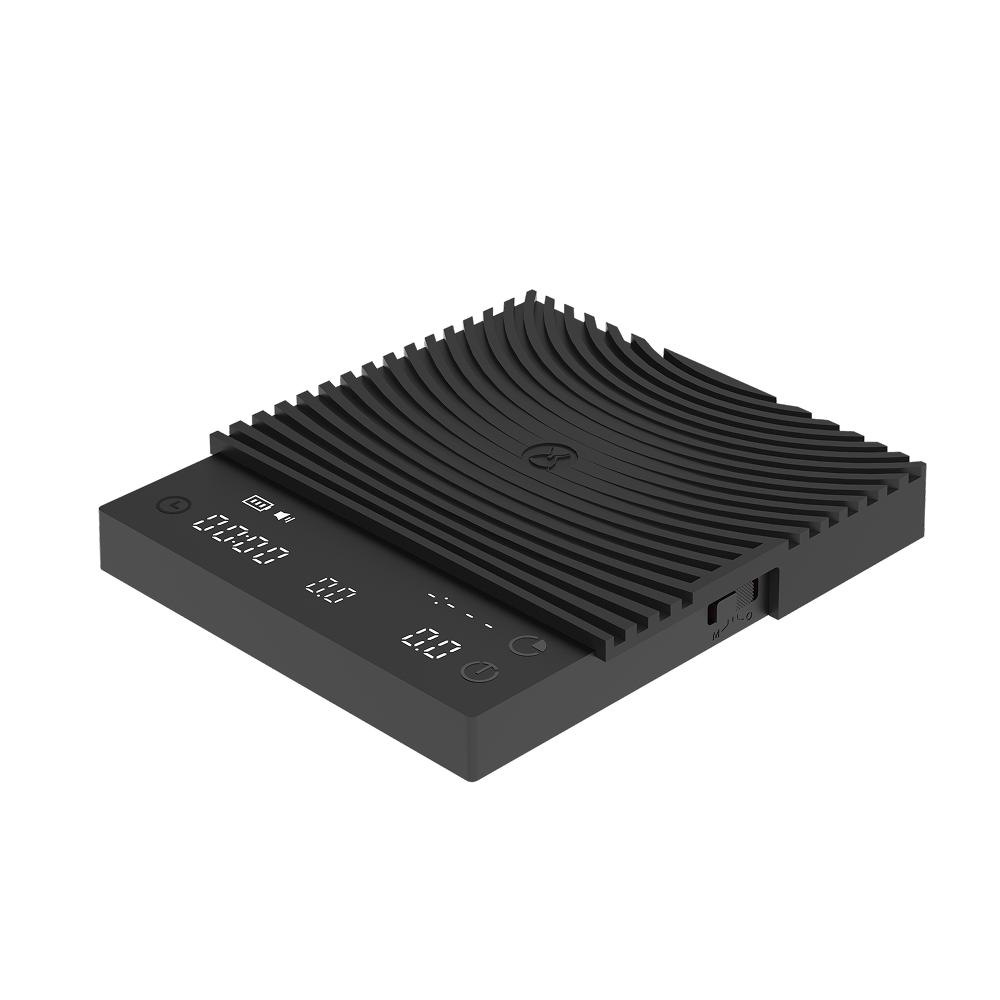
The NEOWEIGH listing discussed in our fit guide states a 0.1 g increment and a 1,000 g capacity. A display increment tells you the smallest step shown. It does not certify that every reading is within 0.1 g of the true mass. Accuracy, repeatability and response time require separate evidence. Be cautious when a marketplace description uses those words interchangeably.
Check repeatability without pretending to calibrate
Place the same dry object in the same position several times on a level surface and note whether the readings settle consistently. This informal check can reveal an obvious problem but cannot prove absolute accuracy. Follow the maker’s instructions if calibration is supported; do not assume a household coin is a certified reference weight.
Choose the simplest feature set that fits
For manual espresso, visibility beneath your cup and a usable timer may matter more than an app. For a pour-over server, capacity and a stable platform may come first. During a return window, check the tasks you actually perform: reaching tare, reading the display and safely removing the vessel. Keep spills away unless the maker explicitly states the relevant water protection.
How we research these guides · Find your next step