 CupClarityOur approach
 TIMEMORE Basic 3 scale: capacity, accuracy and fit explained
Read the detailed load table before treating a 0.1 g headline as a guarantee across a full pour-over setup.
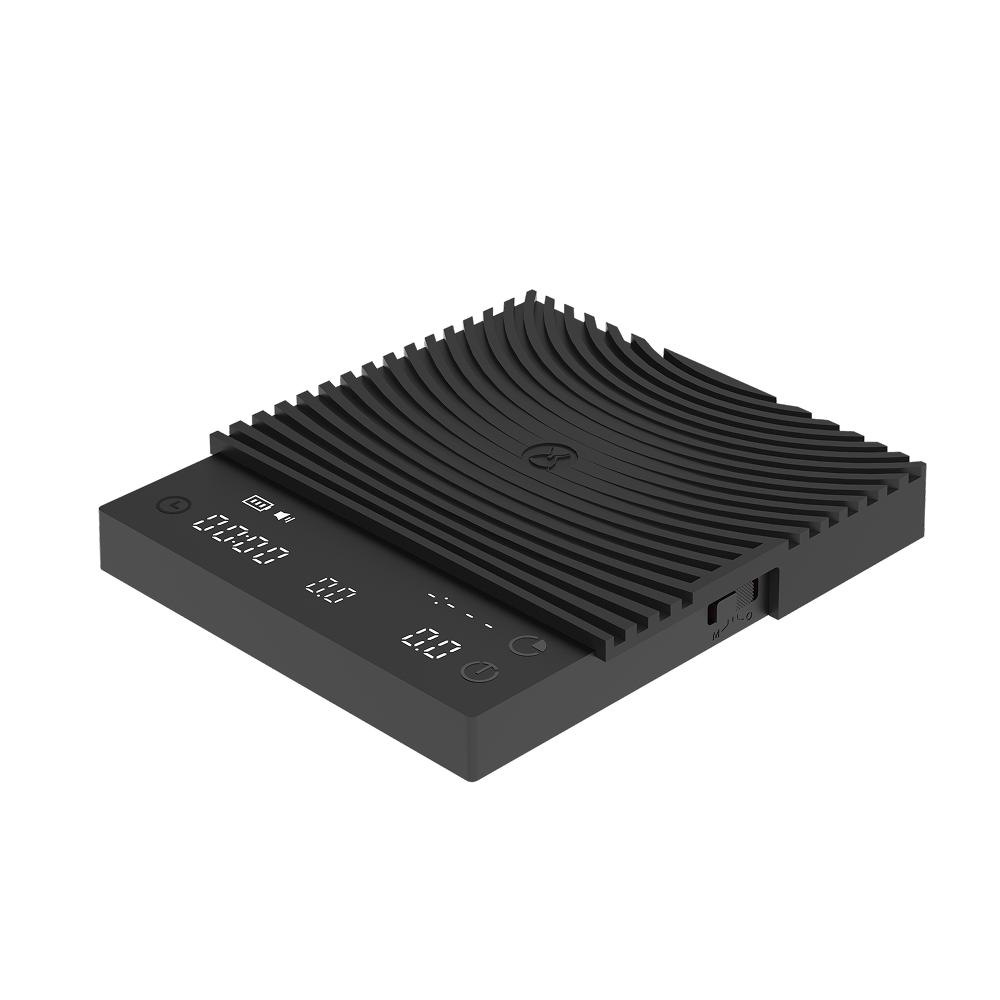
Sources checked September 22, 2026. This is a research-based buying guide, not a hands-on review. Specifications and announcements are attributed; calculations and selection advice are our analysis. Product images are from the linked manufacturer gallery, not our own test photography. No affiliate links.
Read the technical table before the headline
The TIMEMORE Basic 3 product page lists a 0.2–2,000 g load range and a 140 × 120 × 20 mm body. It also separates accuracy variances by load. That detail matters more than applying a single 0.1 g claim to every vessel. This guide interprets the current listing; it does not report calibration results or establish that every unit meets the specification.
The published load bands
The technical table lists 0.1 g for 0.2–500 g, 1 g for 500–1,000 g and 3 g for 1,000–2,000 g under accuracy variances. We preserve those bands rather than assuming the headline applies everywhere. The table shares boundary values between neighboring bands; ask the maker if performance at an exact threshold matters for your use.
Count the equipment as part of the load
Here is an illustrative calculation: a 420 g server, 180 g brewer, 20 g dose and 320 g of water total 940 g before accounting for losses. Taring the display does not remove that physical load. That example sits in the middle published band, even if the screen shows only the added water. Weigh your actual equipment to place your own routine in the table.
Will it fit beneath your cup?
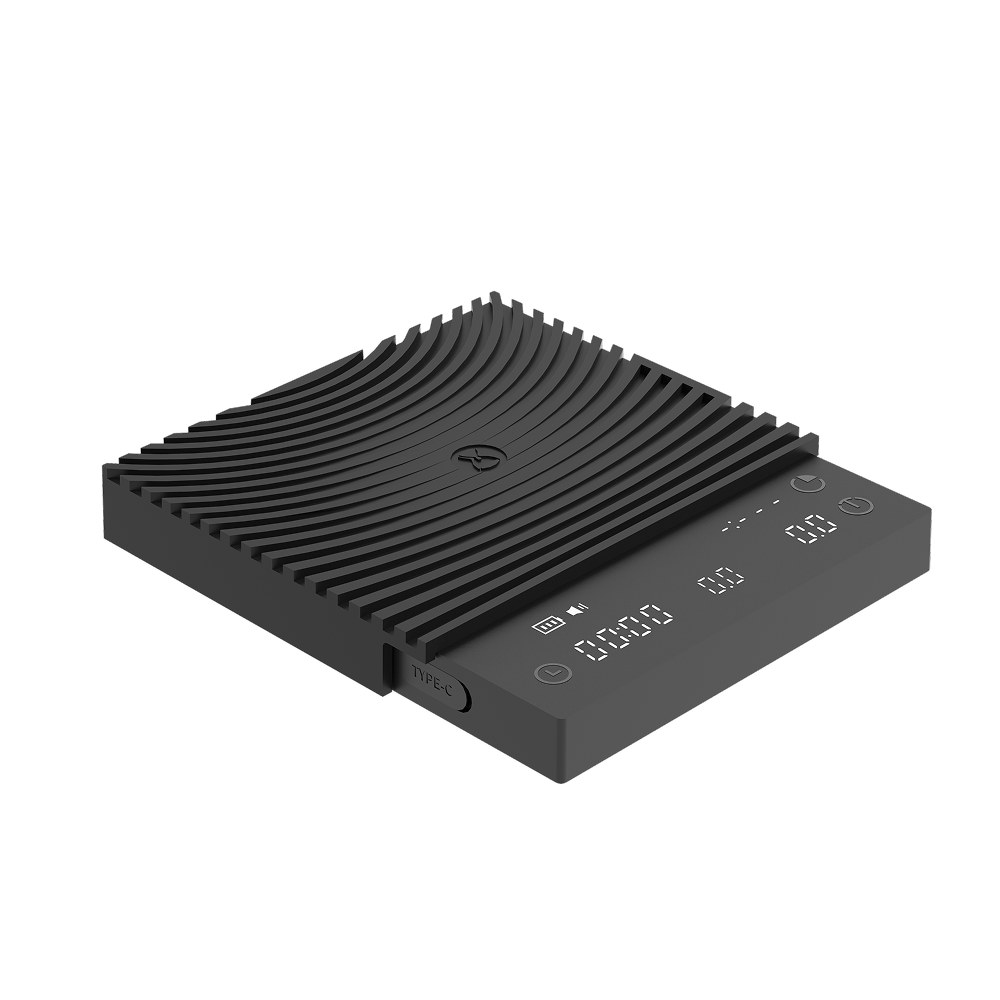
Make a paper rectangle using the stated body dimensions, place it on the dry drip tray and check access to the controls and room beneath the spouts. This is a planning aid, not a compatibility test. Allow for the cup, any mat and how you will lift the cup away. A scale that supports the weight can still be inconvenient in a narrow tray.
Choose a timing workflow deliberately
The manufacturer lists regular, pour-over and espresso timer modes. Before changing your routine, read when the chosen mode starts, tares and stops. In your own evaluation, repeat the same sequence with the same vessel and record unintended resets or early stops. We have not tested trigger reliability, flow-rate response or electromagnetic shielding.
What we would verify before ordering
Check the exact Basic 3 variant, current manual, regional warranty and delivery estimate. We did not verify a September launch date, so this is dated as a specification check rather than launch news. Keep the purchase decision tied to fit, usable load and timing behavior. If all you need is a reliable record of dose and water, a feature-rich display does not replace those basics.
How we research these guides · Find your next step