 CupClarity
What to write in a coffee brew journal
A useful brewing note takes a minute. Record the details that help you repeat a good cup.
Original instructional worksheet and arithmetic examples, not a hands-on product test. Illustrative observations are labeled; use your own measurements in the downloadable record. No affiliate links. Worked example revised September 27, 2026; no hands-on test results are claimed.
Record the recipe before the impression
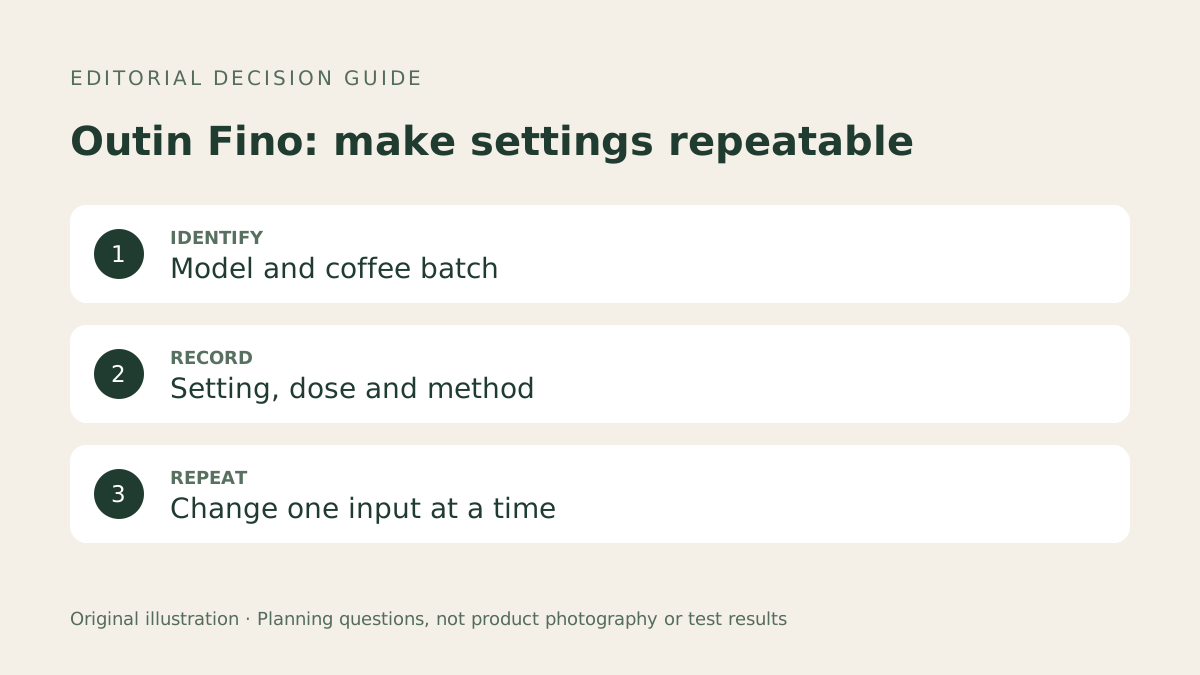
Write down the coffee, brewing method, coffee dose, water amount and grinder setting. A note such as “bright and sweet” is easier to act on when you can reproduce the recipe behind it.
Describe what you actually notice
You do not need a professional tasting vocabulary. Note whether the cup seems strong or weak, light or heavy, pleasant or harsh. Taste again as it cools, and record whether your impression changes.
Give the next brew one clear job
Choose a single change for the next cup. Keep the remaining variables steady. If you change the beans, grinder setting, dose and water all at once, it becomes difficult to understand the result.
- Recipe: 20 g coffee, 320 g water, paper-filtered brewer.
- Observation: enjoyable aroma, but the drink felt too concentrated.
- Next experiment: keep the coffee and grind unchanged and try a little more water.
Keep the notes you use
A notebook or plain text file is enough. Save successful recipes alongside less successful experiments. Your goal is a useful personal reference, not a perfect score sheet.
Mark examples and missing measurements clearly
The recipe and tasting note above are illustrative, not results from a CupClarity test. In your own journal, use actual readings and leave unknown values blank. A guessed water temperature can make a later comparison look more precise than it was. If you followed a published recipe, save its link alongside the changes you made.
Save a baseline separately from experiments
Give your everyday recipe a short name and preserve a complete copy. Put experiments in separate rows with dates and one stated question. When an adjustment is unhelpful, you can return to the original without reconstructing it from a sequence of partial notes. Add the exact brewer and filter model if you change equipment regularly.
A recipe record you can actually repeat
Keep a reusable recipe separate from experiment notes. Copy this blank record for each coffee; leave observed fields empty until you brew. The target is your plan, while the actual output is what you weigh after brewing. Those values need not agree.
- Recipe name and version / coffee / opening date / brewer / filter
- Dry dose (g) / water added (g) / grinder model and setting
- Timing convention / target drink mass (g) / actual drink mass (g)
- Observation in your own words / keep this version or change one item