 CupClarityMy notebook
AeroPress vs French Press: Texture, Batch Size & Cleanup
Both use immersion, but the filter, pressing step and serving routine differ. Compare the complete breakfast workflow before replacing a brewer.
Sources checked October 21, 2026. This is a research-based comparison, not a hands-on test or taste ranking. Manufacturer facts are attributed; worked examples and decision worksheets are our editorial analysis. Illustrations are schematic, not photographs.
| Decision | AeroPress with paper | French press with mesh |
|---|---|---|
| How coffee leaves | Pressed through a filter into another vessel | Poured from the brewing carafe |
| Filtering setup | Disposable paper micro-filter | Reusable mesh assembly |
| Typical buying question | Which model fits my serving? | What is the usable carafe volume? |
| Grounds disposal | Puck and paper removed together | Wet loose grounds removed from carafe |
| Shared breakfast | Count any repeated batches | Check one-batch serving volume |
| Taste assessment | Compare at equal serving temperature | Record sediment and texture separately |
Two plungers, different jobs
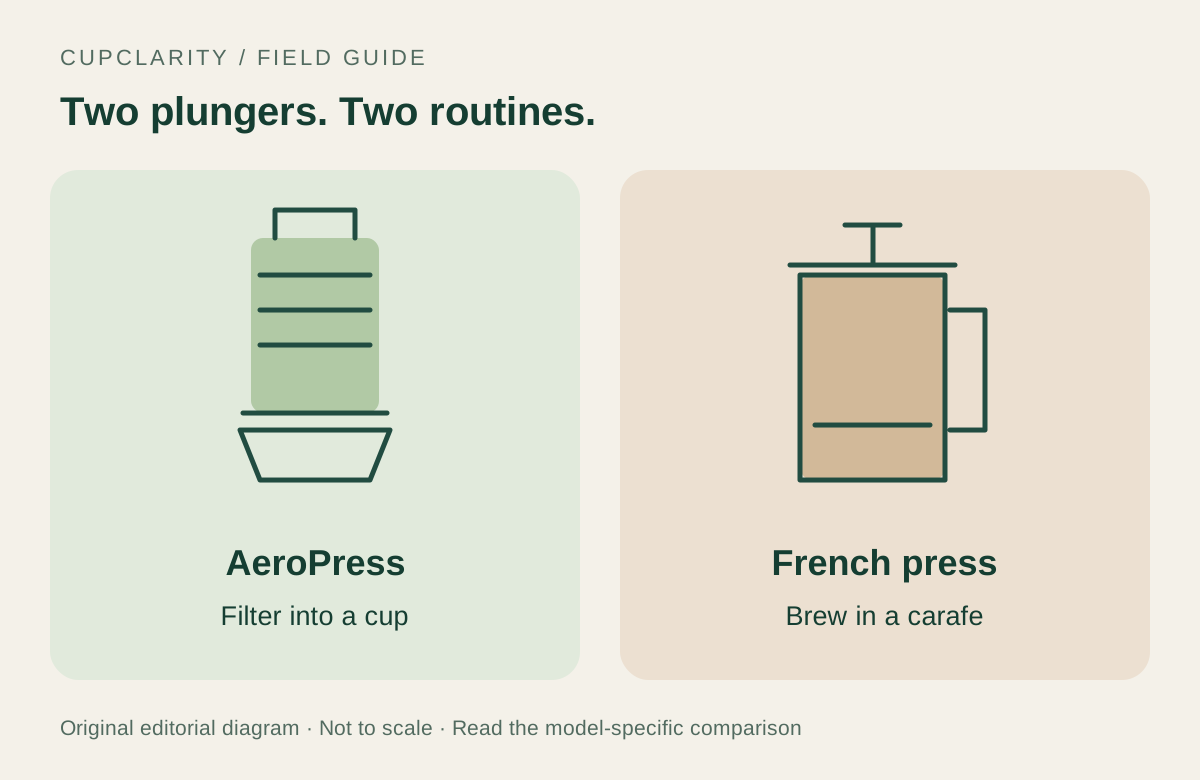
In an AeroPress, the plunger moves brewed coffee through a filter into a separate cup or server. In a French press, the mesh assembly separates grounds as you prepare to pour from the carafe. Treat those as different workflows, even though both involve pushing a handle. The filter and the final pouring step matter to daily use; the visual similarity between the devices is not enough to choose between them.
Texture is a preference to record
Paper and mesh are different filtering configurations. Rather than calling one clean and the other bad, record how much suspended material you notice, whether it bothers you and how the last sip compares with the first. Do this at similar drinking temperatures. A paper-filtered AeroPress result should not be described as a test of every AeroPress setup: optional metal filters would change the comparison. We have not tasted the two methods side by side for this guide.
A family breakfast changes the capacity question
Bodum explicitly states that its cup convention is approximately four ounces, so its named cup count should not be read as a count of large mugs. Measure your normal serving and compare the exact carafe specification. For AeroPress, choose the actual model before estimating batches. If two people want different beans, separate small preparations may be desirable; if everyone drinks the same coffee, a shared carafe may simplify service.
Use mass to make the comparison repeatable
Manufacturer instructions provide a starting workflow, but a weighed record helps you repeat your own result. As an invented planning example, 30 g coffee and 480 g water is a 1:16 input ratio. Measure the beverage you actually serve rather than assuming all water reaches the cup. Keep any post-brew dilution visible in the notes. Do not assign the same grinder click number to two different grinders or assume it has the same meaning across models.
Time the job from setup to a clean counter
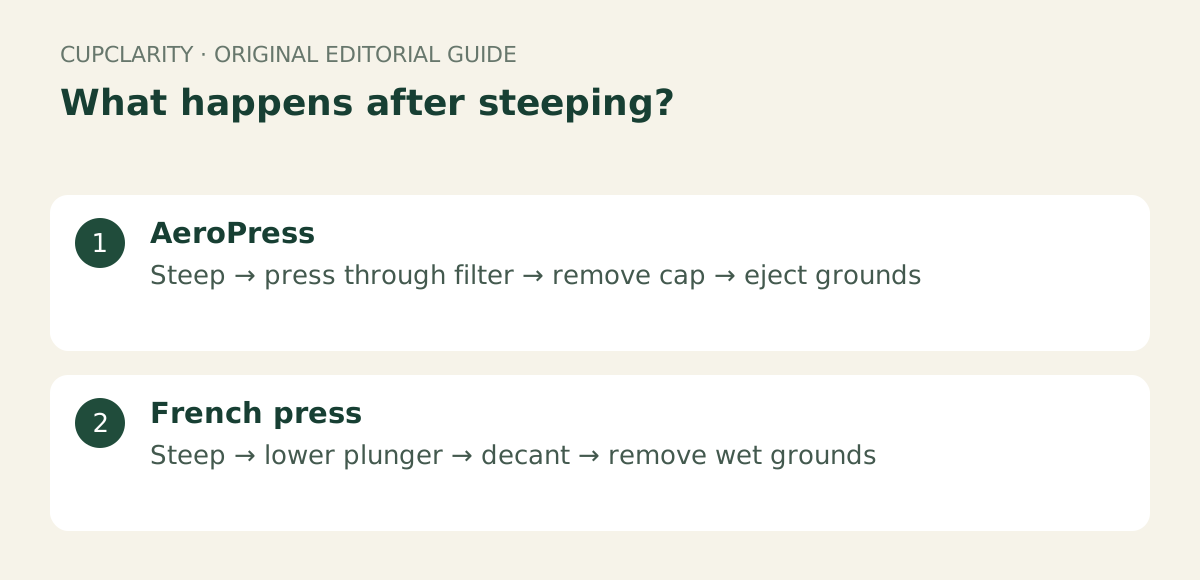
Start your timer before loading the brewer and stop after the parts are ready for their next use. A short advertised brewing time does not include heating water, grinding, serving and washing. AeroPress describes ejecting a compact puck; a French press requires handling loose wet grounds and cleaning the mesh. The useful test is whether you mind those jobs in your own kitchen, not whether one online demonstration finishes a few seconds faster.
Look at replacement parts and daily handling
Check filter availability, replacement seals or mesh parts, and the specific care instructions for the exact model. Glass, plastic and metal versions have different handling considerations; the product family name does not identify all materials. A damaged vessel or a plunger that needs force should not be treated as a recipe experiment. Follow the manual rather than improvising extra pressure, and let parts cool before the cleaning procedure requires handling them.
Does a French press need paper filters?
A standard mesh French press does not require disposable paper. That does not make its mesh assembly maintenance-free: inspect and clean it according to the model instructions. With AeroPress, verify whether the bundle includes paper or an optional reusable filter and which model it fits. Compare like with like when ordering replacements. A low-priced package of incompatible filters contributes nothing to the value of the brewer you own.
Choose by the routine you want to keep
Shortlist a French press if a shared carafe and reusable mesh suit you. Shortlist AeroPress if separate preparations and its press-through cleanup suit you. If the only issue with your current brewer is an unpleasant cup, first record dose, water and technique before buying a replacement. Changing the device can help a workflow problem; it is not evidence that a poorly documented recipe will automatically become repeatable.
Compare cleanup with the whole brew cycle
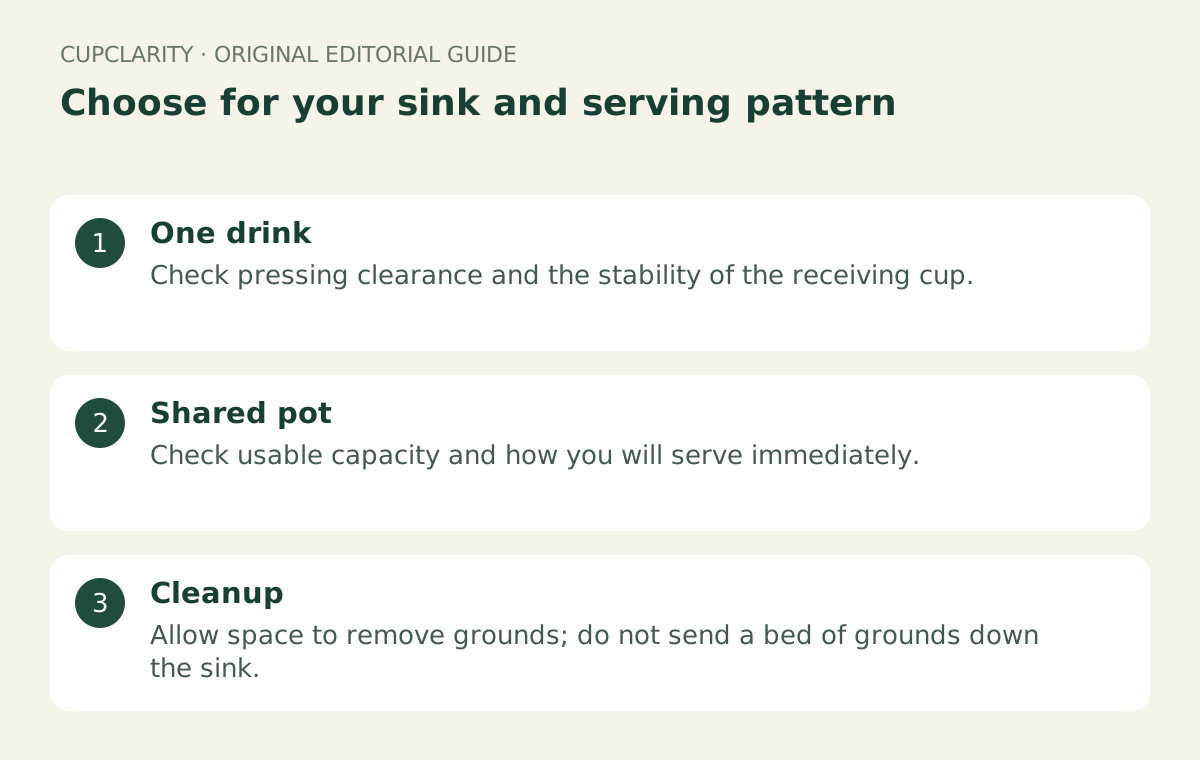
Include preparation and washing when you time a weekday routine. Start with a dry brewer and stop after the equipment is ready to air-dry. For a French press, record whether you decant the whole batch or leave some coffee in the carafe; those are different serving routines. For AeroPress, include filter preparation, cap removal and rinsing the seal. Compare the specific filter you intend to use, because changing from paper to a metal accessory also changes the comparison. Do not treat a manufacturer's maximum vessel volume as a guaranteed finished serving size. Leave the working room required by that model's instructions.
How we research these guides · Find your next step