 CupClarityMy notebook
AeroPress vs V60: Workflow, Filters & Brewing for Two
Compare pressing and pouring by the steps you perform, the servings you need and the cleanup you will repeat every day.
Sources checked October 21, 2026. This is a research-based comparison, not a hands-on test or taste ranking. Manufacturer facts are attributed; worked examples and decision worksheets are our editorial analysis. Illustrations are schematic, not photographs.
| Decision | AeroPress | Regular V60 |
|---|---|---|
| Main action | Steep, then press through a filter | Pour through a draining coffee bed |
| Recipe control | Dose, steeping, stirring and pressing | Dose, grind and pouring sequence |
| Serving plan | Check model; repeated batches may be needed | Check dripper and receiving vessel sizes |
| Filter supply | Match filter to exact AeroPress model | Match 01 / 02 / 03 paper to dripper |
| Daily cleanup | Remove filter and coffee puck; rinse parts | Lift out paper and grounds; rinse dripper |
| Best question | Do I want a compact pressing routine? | Do I enjoy controlling the pour? |
The real difference is what you do with your hands
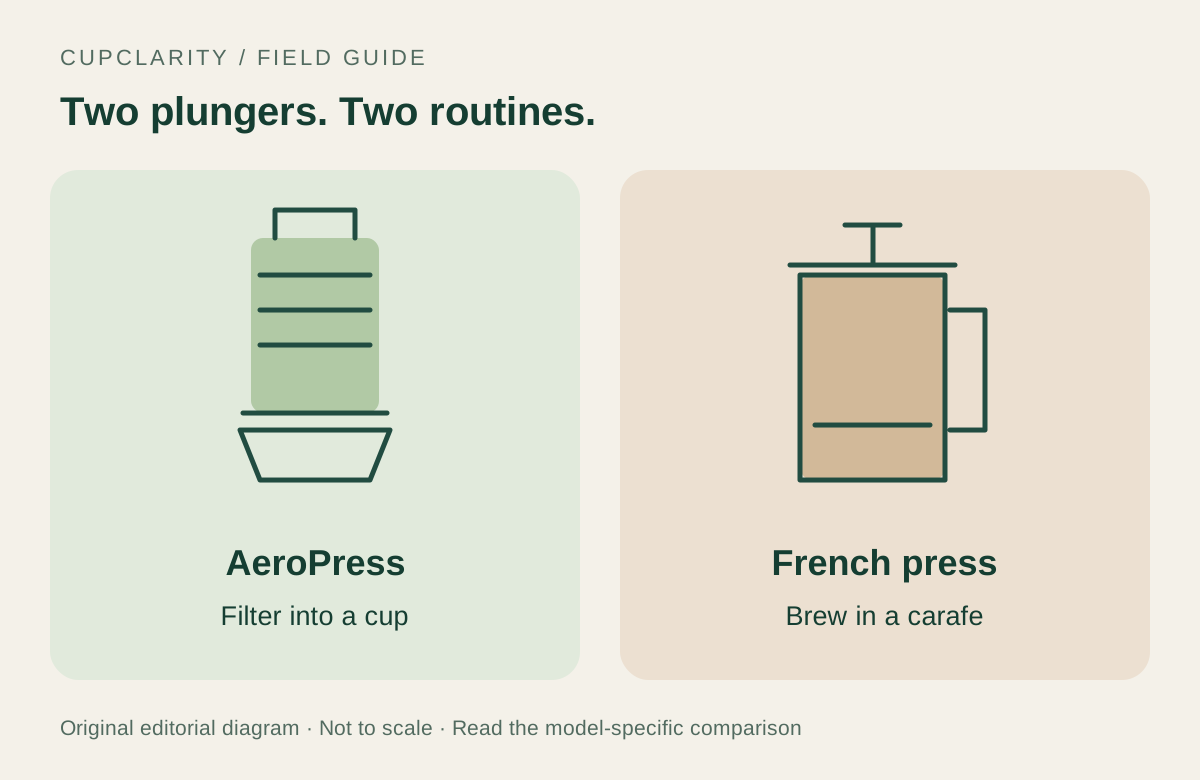
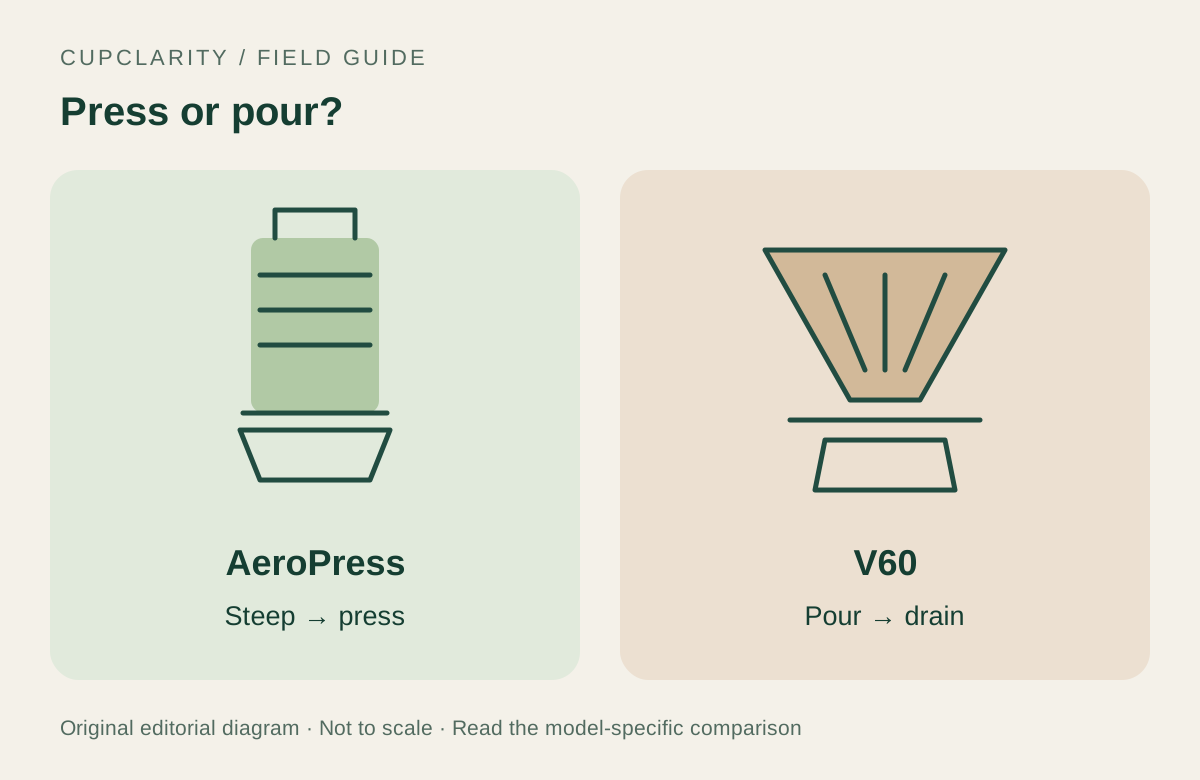
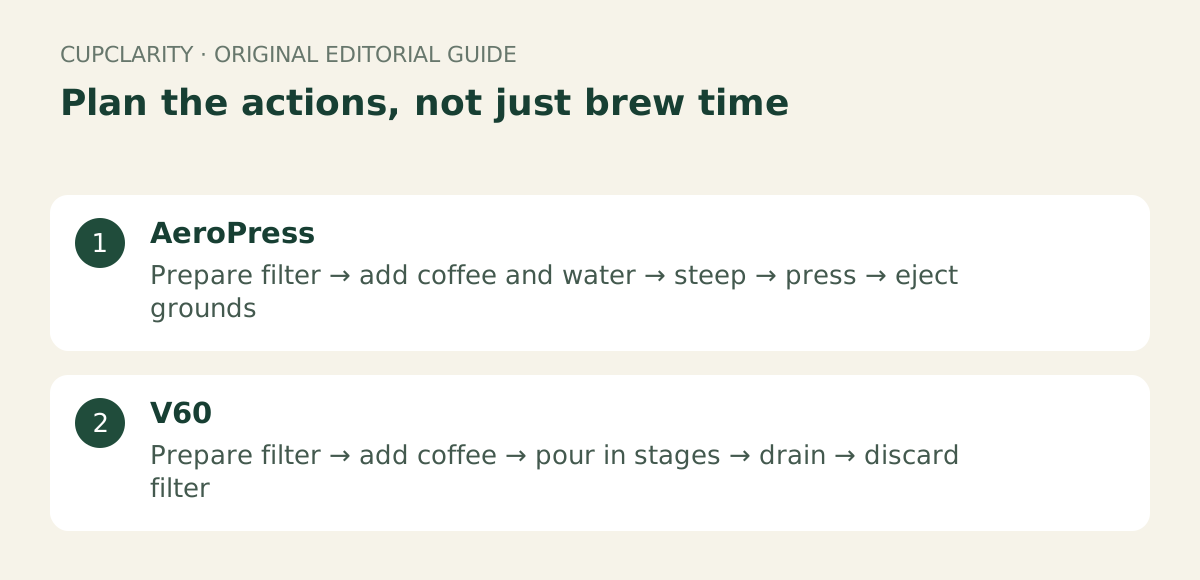
AeroPress describes a brewing process that combines immersion, filtration and pressure from a hand-operated plunger. HARIO’s regular V60 is a gravity-driven pour-over. That distinction gives you different tasks to repeat: managing a steep and press, or managing a sequence of pours. Neither mechanism proves a universal taste winner. Consider whether your morning allows you to stand at the brewer and pour carefully, and whether pressing over a stable cup fits your workspace.
Compare a normal mug, not the word cup
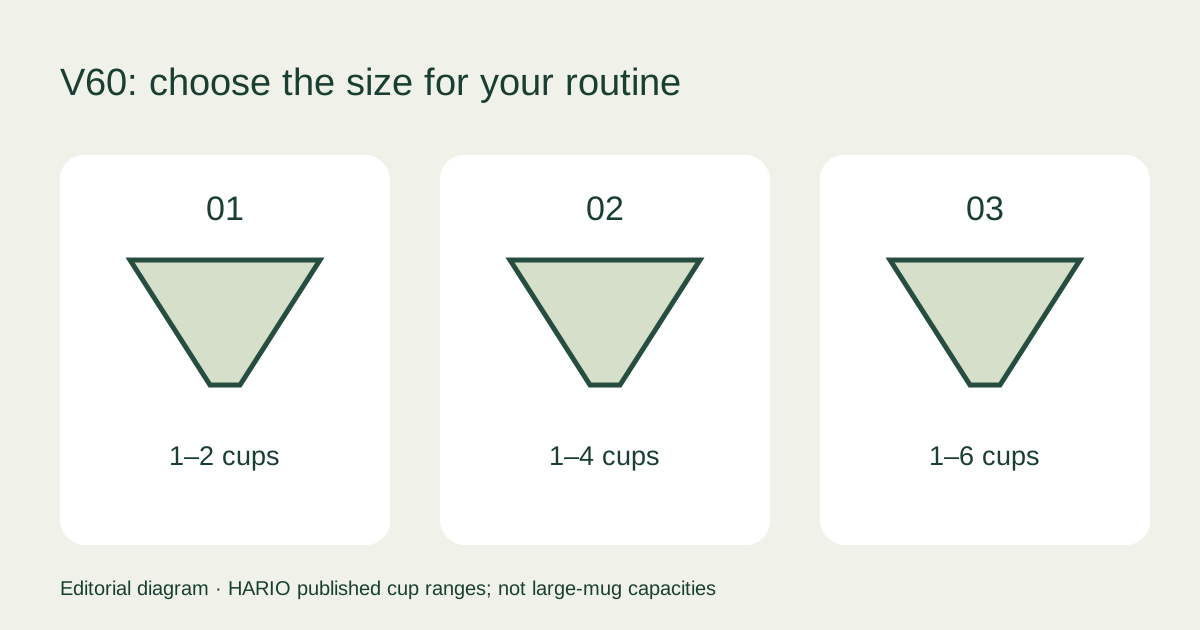
Before shopping, fill your favorite mug to its normal drinking level and measure that volume. Write down whether you want one such serving or two. AeroPress models differ, and V60 drippers come in different sizes. A product description saying several cups may use a smaller serving than you do. If one brewer needs two cycles, include the second grinding, loading and cleanup cycle in the comparison rather than comparing only the first extraction.
Make the recipe comparison fair
Use the same beans, the same coffee mass and comparable finished drink amounts for an exploratory comparison. Keep separate records of brew water and any water added afterward. For example, 18 g coffee with 288 g total recipe water is a 1:16 input ratio. It does not guarantee equal extracted strength or identical final volume across brewers. A concentrated recipe diluted after pressing is a valid option, but label the dilution so you know which process you preferred.
Where each method asks for practice
A V60 recipe makes pouring sequence, water level and drawdown visible. With AeroPress, note the steeping interval, agitation and how you press. Use each maker’s normal instructions before experimenting. If a result disappoints, change one recorded parameter rather than simultaneously changing beans, grind, temperature and brewer. A simple notebook containing dose, water, time and a sentence about taste is more useful than an unrepeatable best-ever recipe.
Pack the whole kit before calling it portable
Include filters, grinder, water-heating access and a suitable receiving vessel in your travel list. The brewer alone is only part of the bag. A small plastic dripper and an AeroPress can both make sense depending on what is already available at your destination. Do not assume a thin disposable cup is appropriate for a pressing setup; follow the manufacturer’s support and pressing instructions. This comparison does not recommend inverted brewing or improvised stands.
Price a month of your actual routine
Add the brewer, any missing accessories and your expected paper-filter use. If two daily preparations use two filters, thirty days means sixty filters; that arithmetic does not establish which filter is cheaper in your market. Include delivery fees and pack counts from the exact local listing. Reusable filters change both the cleanup and the filtering setup, so evaluate them as a different configuration rather than silently substituting them into a paper-filter comparison.
Can I make two servings from one preparation?
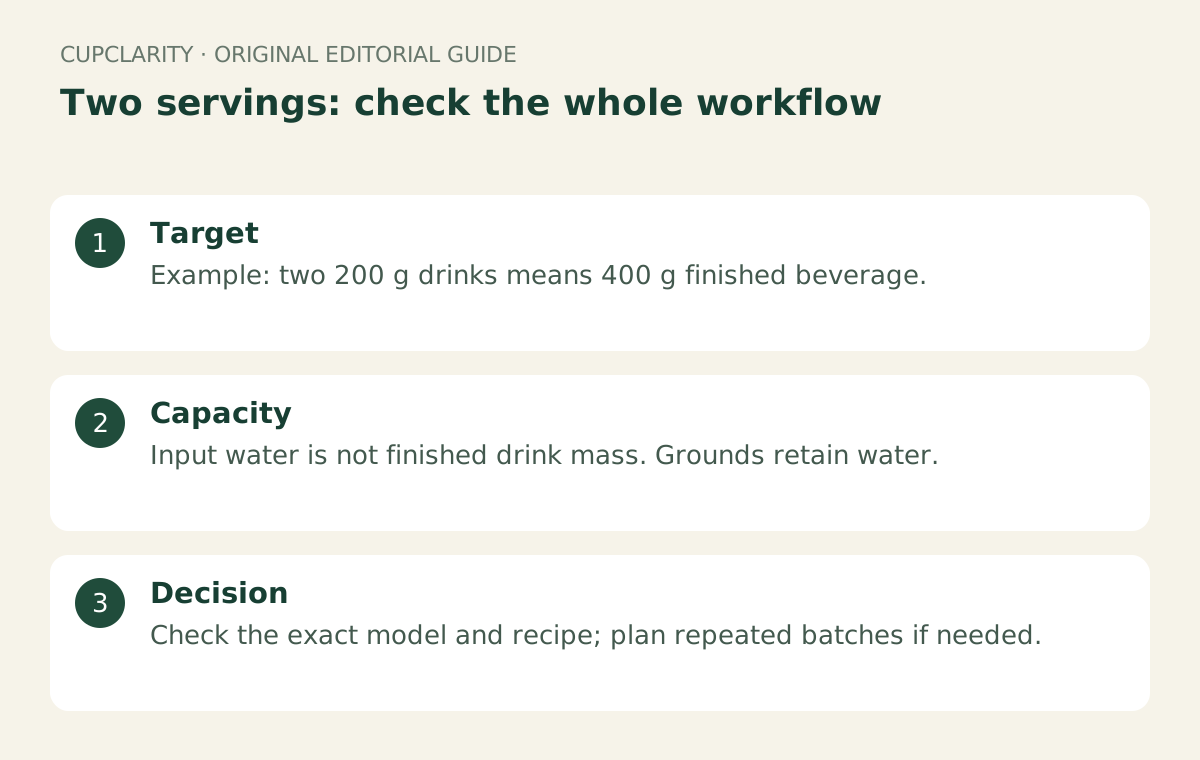
Possibly, but specify the model, recipe and final volume. If you use a concentrated preparation and add water afterward, write down both quantities. For example, two 180 ml portions require 360 ml finished beverage; a recipe using 360 g water input does not guarantee that output. If one person prefers a different strength, splitting a base and adjusting each cup is another experiment to document, not proof that both brewers have equal capacity.
Which one would we shortlist?
For someone who enjoys repeated pours and already owns a suitable kettle and server, the V60 deserves a look. For someone who prefers a compact steep-and-press process, investigate the appropriate AeroPress model. For two large mugs, first check whether either candidate can produce your preferred recipe in one cycle. These are workflow-based shortlists, not results of a taste test. Borrowing a brewer for a few mornings is a more direct answer to personal preference than a specification sheet.
A practical two-person trial
Write down the finished drink mass you want for each person before choosing a recipe. Water added to the brewer is not the same as liquid collected in the cup because the grounds retain some water. If a single batch cannot safely fit, compare the time and cleanup of two batches rather than forcing a larger dose into the chamber. For a fair comparison, use the same coffee and record grind, dose, water added and drink mass separately. Change one variable on the next attempt. A difference in taste after changing both grind and recipe does not identify which brewer caused it.
How we research these guides · Find your next step