 CupClarityMy notebook
Chemex vs V60: Filters, Serving Workflow & Ownership Costs
Look beyond the glass silhouette: compare the paper system, vessel arrangement, cleanup and the cost of your actual brewing routine.
Sources checked October 21, 2026. This is a research-based comparison, not a hands-on test or taste ranking. Manufacturer facts are attributed; worked examples and decision worksheets are our editorial analysis. Illustrations are schematic, not photographs.
| Decision | Classic Chemex setup | V60 setup |
|---|---|---|
| Vessel layout | Brewing cone and server integrated | Dripper and receiving vessel separate |
| Paper selection | Confirm the Chemex model and compatible filter | Choose paper for the V60 size |
| Serving | Lift and pour from the brewer | Remove dripper and serve from receiver |
| Counter space | Store the complete vessel | Store dripper and optional server |
| Cost check | Brewer plus compatible filter supply | Dripper, receiver and matching papers |
| Comparison control | Record paper, dose and drawdown | Record paper, dose and drawdown |
Start with the vessel arrangement
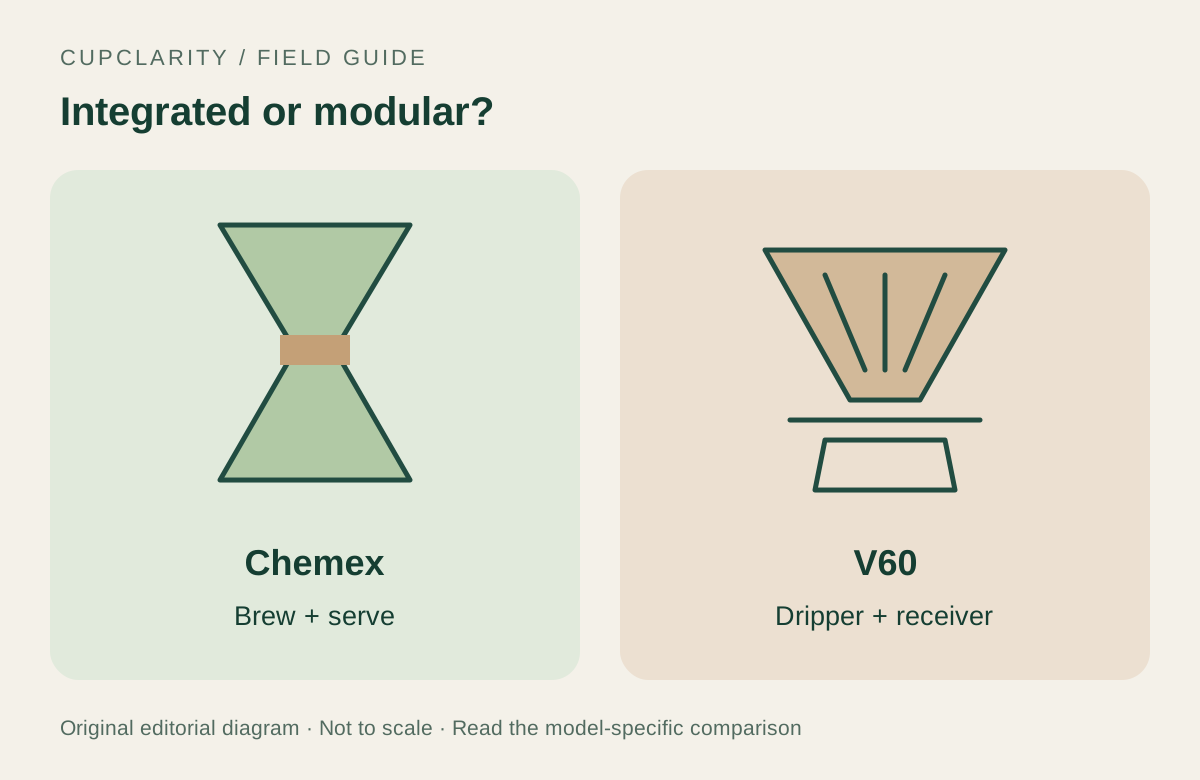
A classic Chemex is a combined brewing and serving vessel, whereas a V60 dripper sits on a cup or server. That changes how you set the table, lift the finished coffee and wash up. If you already own a server that you like, price that existing equipment into the decision. If you want a single object on the breakfast table, check whether the integrated vessel is comfortable to lift when filled to your usual serving level.
The filter is part of the system
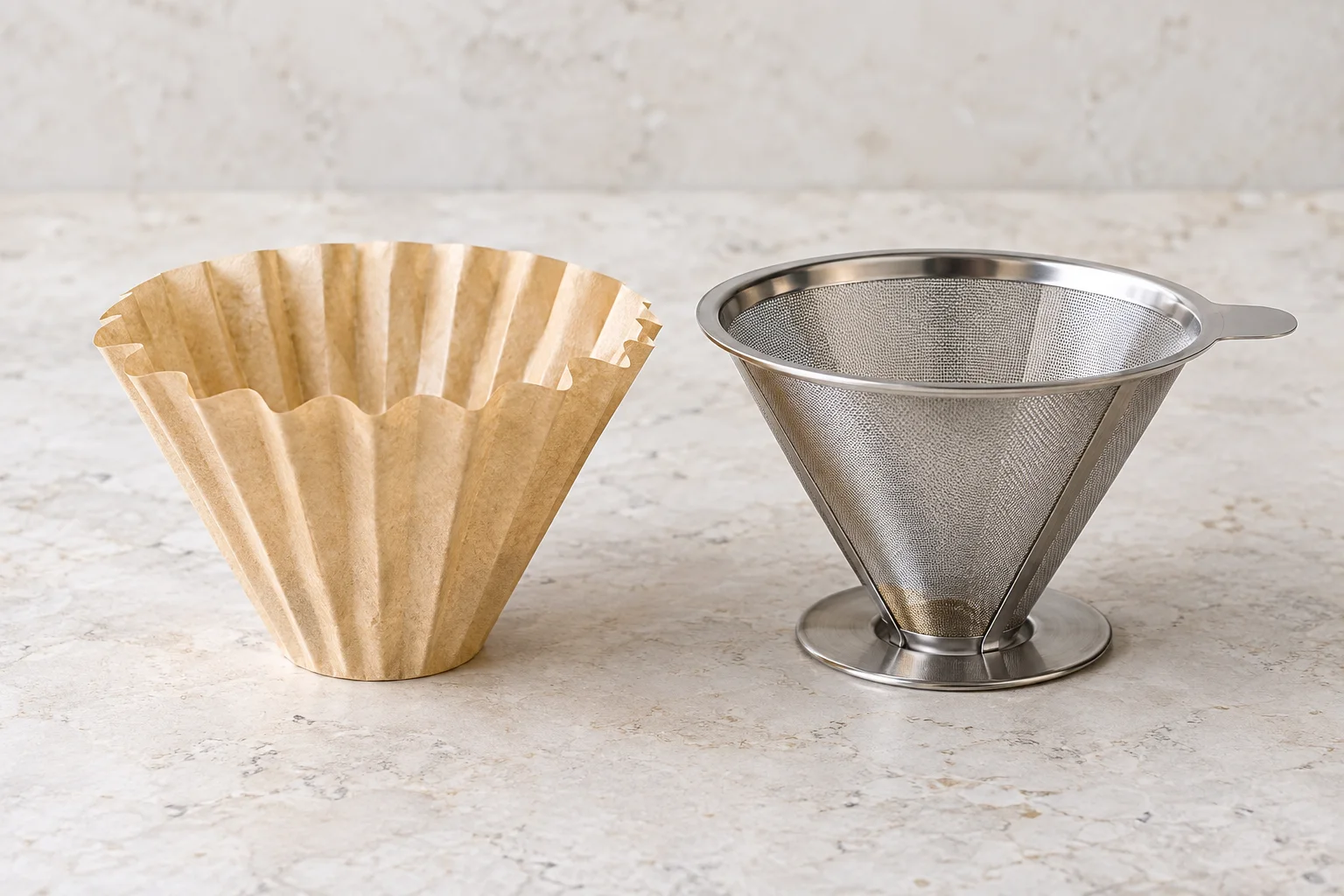
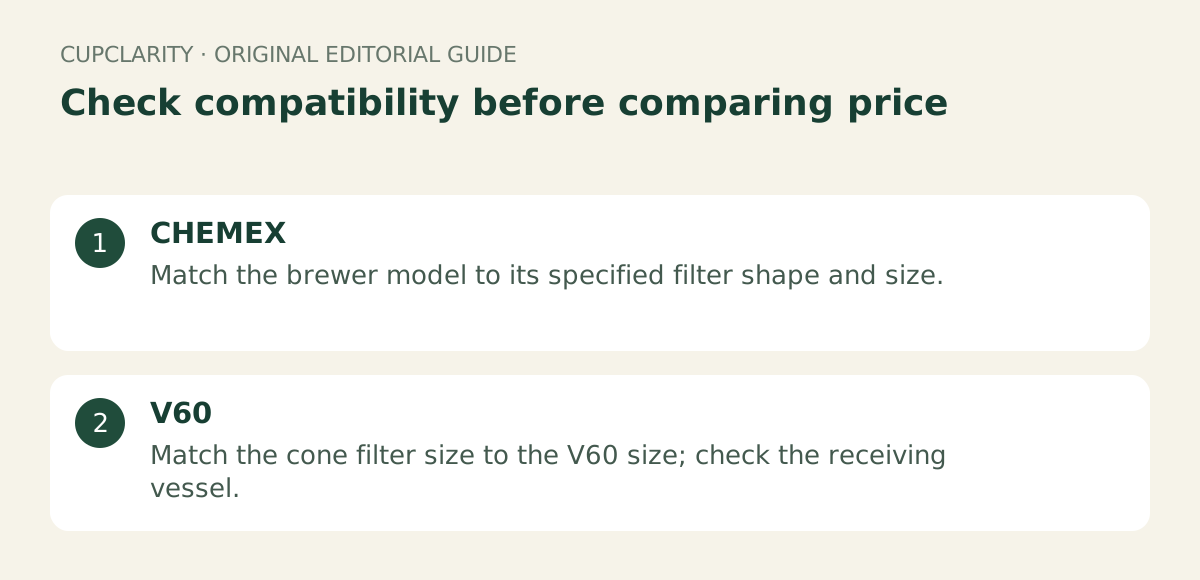
CHEMEX describes its bonded circle papers as thicker than most competing papers. That is a manufacturer description, not our laboratory comparison with every V60 filter. Do not turn it into a universal numerical claim about taste, acidity or extraction. Check compatible filter shape and size for the precise brewer you are purchasing. The two systems should not be compared with an arbitrary paper substitute and then presented as standard configurations.
Why a grind setting may not transfer
A different paper, cone and batch changes the brewing setup. Start with the relevant maker’s instructions and make notes rather than insisting that yesterday’s grinder setting must work unchanged. Record total water, pouring stages and when the drawdown finishes. If the brew slows, inspect how the filter is seated as well as the recipe. Changing the grind without checking the physical setup can make it harder to understand what happened.
Plan for the amount you actually pour
For an illustrative two-person recipe, 32 g coffee at 1:16 calls for 512 g water input. The finished beverage will not necessarily be 512 ml; measure it in your own setup. Compare the usable capacity of the exact Chemex model with the selected V60 and server. Neither the word large nor a nominal cup count establishes that your two favorite mugs will be filled to the level you expect.
Do a filter cost calculation without invented prices
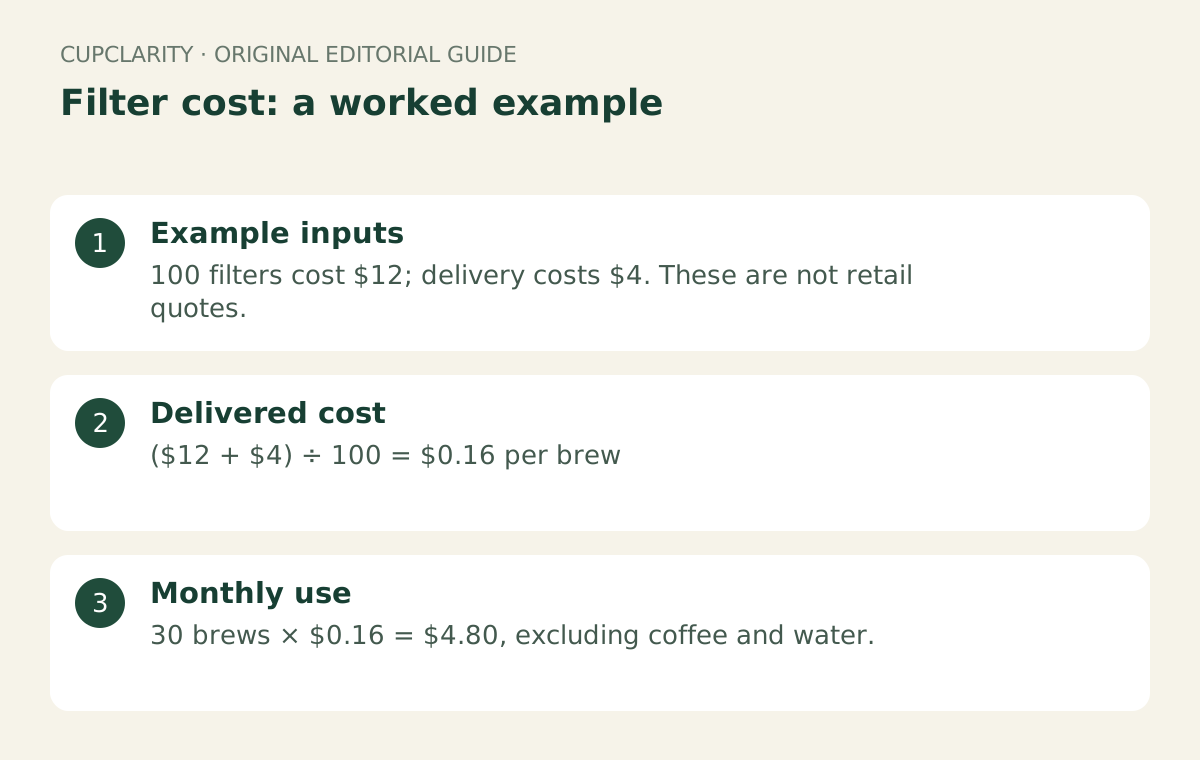
Suppose one hypothetical paper costs $0.12 and another $0.20. At two brews a day for thirty days, the difference is $4.80. These are examples, not current Chemex or HARIO prices. Replace them with delivered pack cost divided by usable filter count. Add the purchase price of any missing server and the availability of replacement glass before deciding that the least expensive dripper makes the least expensive complete setup.
Cleaning and storage are everyday differences
Check how easily your hand or an appropriate brush reaches the vessel, and follow the care instructions for its material and accessories. An integrated vessel must be handled as a whole during washing; a separate dripper can be lifted off its receiver. Measure shelf height rather than judging scale from lifestyle photographs. For an office or shared kitchen, also decide where wet parts will drain without occupying the only serving space.
Can I use the same paper in both brewers?
Do not assume compatibility from a conical appearance. Check the exact filter and brewer model together; a filter has to sit and support the wet coffee properly as well as physically fit through the opening. Our comparison assumes each system uses appropriate paper. If you deliberately try another paper configuration, record it as an experiment and follow the equipment instructions rather than presenting the result as standard Chemex-versus-V60 performance.
A fair reason to choose either
Choose around what you want to repeat: an integrated glass serving ritual or a modular dripper-and-receiver setup. If you are happy with your present pour-over, a new vessel may be a preference purchase rather than a necessary upgrade. To compare taste, use the same coffee, similar finished volume and consistent tasting temperature, while recording each recipe separately. We do not assign a flavor winner from product descriptions.
Calculate ownership cost without mixing pack sizes
Compare delivered cost per usable filter rather than the headline pack price. A cheaper pack is not cheaper if it is the wrong shape or size for the brewer. Record the quantity, shipping charge and availability in your country. The example in the diagram deliberately uses hypothetical prices; replace every input with a current local quote. Separate recurring filter spending from one-time costs such as a carafe, scale or pouring kettle you already own. When comparing two-person service, also check whether the brewing vessel doubles as the serving vessel or whether you need an additional server and more washing space.
How we research these guides · Find your next step