 CupClarity
TIMEMORE C5 Pro vs C5 ESP Pro: Specs & Espresso Differences
31 vs 15 microns per click, the same listed burr and a 25 g catch cup: compare the C5 models for filter coffee, espresso and daily handling.
Official source rechecked October 6, 2026. Research-based guide, not a hands-on or tasting test. Product imagery is supplied by the brand and credited; calculations and buying checklists are our analysis. Example prices are hypothetical. Local stock and seller terms require confirmation. No affiliate links.
| Published specification | C5 Pro | C5 ESP Pro |
|---|---|---|
| Burr | 42 mm S2C-042-III | 42 mm S2C-042-III |
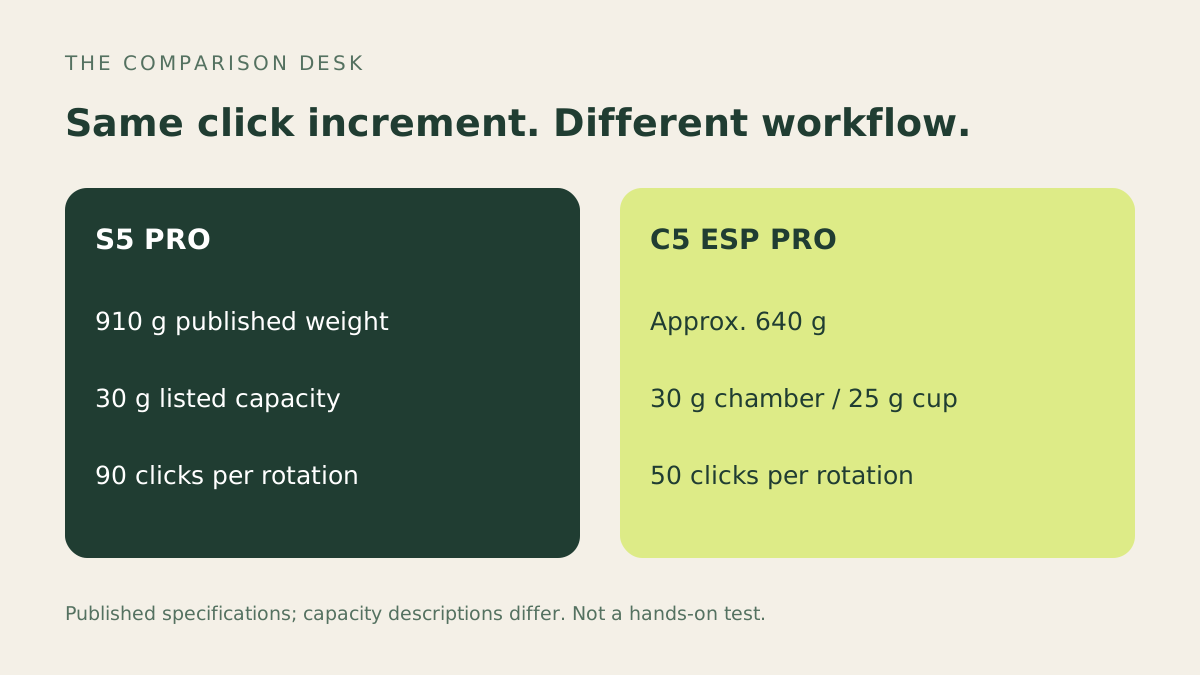
| Adjustment increment | 0.031 mm / click | 0.015 mm / click |
| Clicks per rotation | 48 | 50 |
| Grind chamber / catch cup | 30 g / 25 g | 30 g / 25 g |
| Approximate weight | 640 g | 640 g |
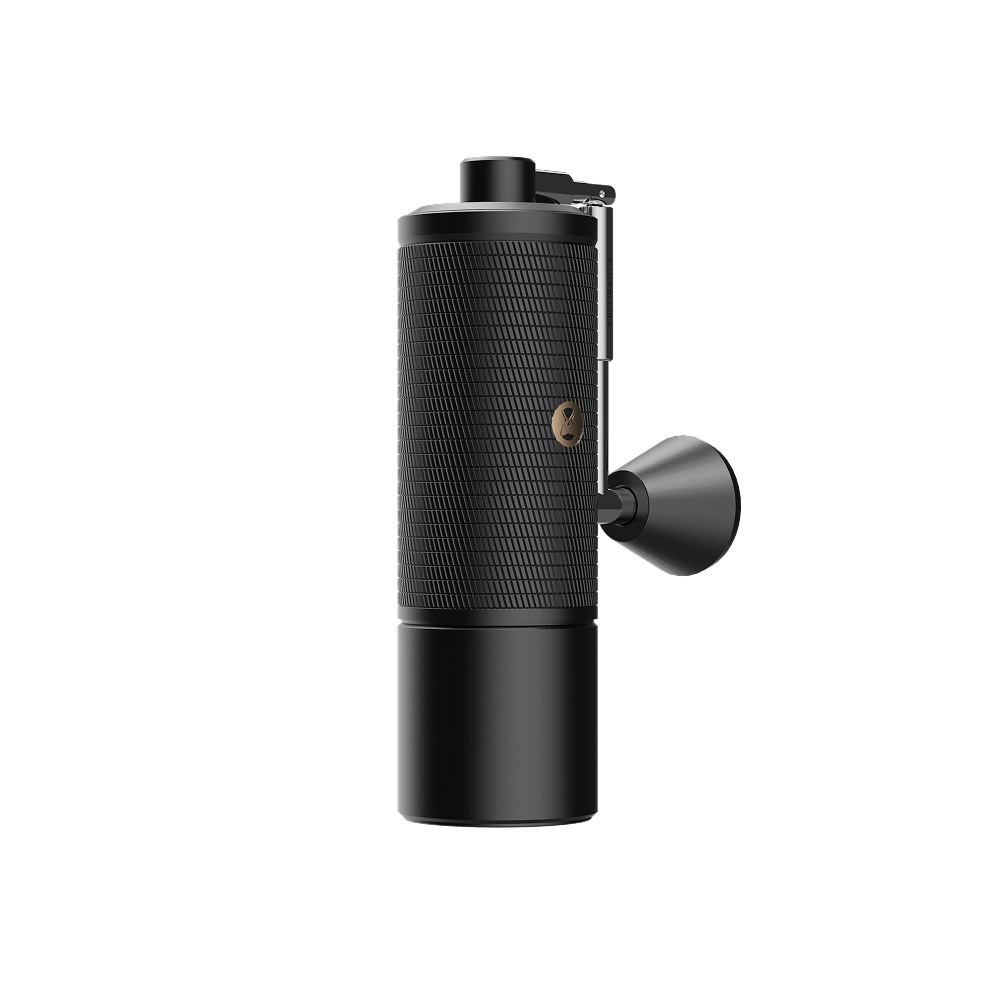
| Body | 53 mm diameter × 172 mm | 53 mm diameter × 172 mm |
| Handle | Folding | Folding |
| Our selection starting point | Primarily filter | Regular espresso |
The short answer
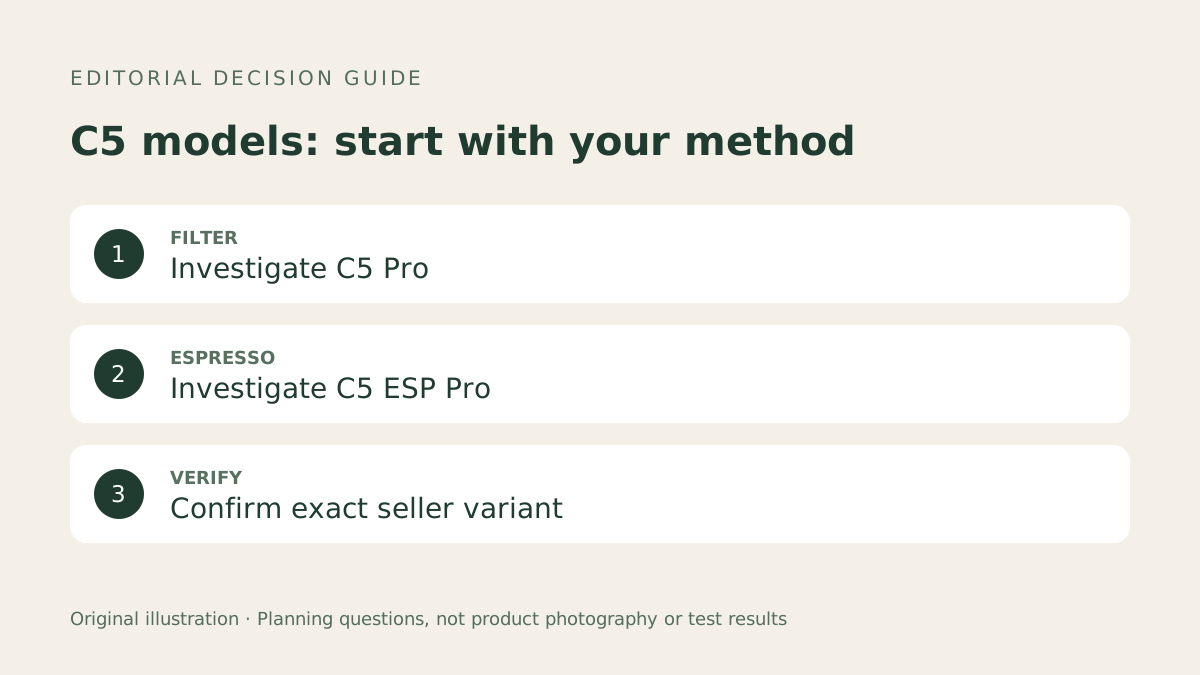
Start with your main brewing method. TIMEMORE positions the C5 Pro toward pour-over and the C5 ESP Pro toward finer espresso adjustment. Our interpretation is that the choice is mainly about control and workflow: finer adjustment is useful when small changes matter, but it does not establish that one model makes a better-tasting cup. We have not ground coffee with either model.
Read the adjustment numbers in context
The table transcribes the maker’s specifications; the last row is our interpretation. The two mechanisms move by different amounts per click. That difference can matter when one setting runs too quickly and its neighbor too slowly: a smaller increment offers an intermediate adjustment opportunity. It does not promise that either grinder will solve an espresso problem caused by dose, preparation or the coffee itself. A setting number is a position on that grinder, not a portable recipe for another model.
For a mostly filter-coffee routine
Write down your normal dose and how often you switch brewers. If your usual batch exceeds the stated catch-cup capacity, consider the extra handling needed rather than assuming the entire dose will fit. A simple routine that you can repeat can be more valuable than a large number of settings. If your current grinder already gives you enjoyable, repeatable cups, a newer model name alone is a weak reason to replace it.
Why a 30 g chamber does not make a 30 g workflow
The stated receiving capacity is smaller than the chamber capacity. For a 30 g recipe, do not assume the full grounds output can be collected in one uninterrupted fill merely because the beans fit above. Plan two portions, such as 15 g plus 15 g, following the manual for handling the catch cup. For two 18 g drinks, two separate 18 g preparations are easier to track than treating a combined 36 g dose as one fill. Bean density and ground-coffee bulk vary; these are planning examples, not measured maximum capacities.
For an espresso routine
The ESP model’s finer stated increment makes it the more relevant of these two to investigate for espresso. You still need evidence that the grinder, beans and basket work well together. Ask for demonstrations using a comparable dose and coffee, and consider the hand effort involved in your daily number of shots. A specification sheet cannot tell you whether that effort will be comfortable for you.
C5 ESP vs C5 ESP Pro: do not assume a third specification
The official page uses several word orders, including C5 Pro Esp and C5 Esp Pro. A seller title shortened to C5 ESP is not enough to establish a distinct model or to prove it is identical. Ask for the model printed on the box, the supplied manual, adjustment specification and included handle. Match those details against the manufacturer documentation. We have not verified a separate current C5 ESP specification set, so this page does not invent a third column. Check the selected variant after changing color and retain the seller’s written answer.
How to choose without buying twice
List your three most frequent recipes before comparing prices. If all are filter recipes, start your research with the Pro; if espresso is a regular part of the routine, investigate the ESP Pro first. If both seem suitable, prioritize clear regional support and a workable return policy. Neither the brand’s promotional language nor this guide is a substitute for a hands-on comparison of your intended use.
Choose by the problem you actually need to solve
For one filter brew each morning, prioritize a repeatable setting and comfortable handling. For frequent espresso adjustments, the ESP model is the more relevant starting point because of the finer specified movement. If you alternate methods every day, record both settings and the direction of adjustment instead of assuming you will remember them. If hand effort is already the reason you avoid making coffee, switching between these two manually driven models may not solve the problem. Seek a demonstration with a comparable roast and dose, or evaluate an electric workflow.
Compare total ownership cost, not the headline discount
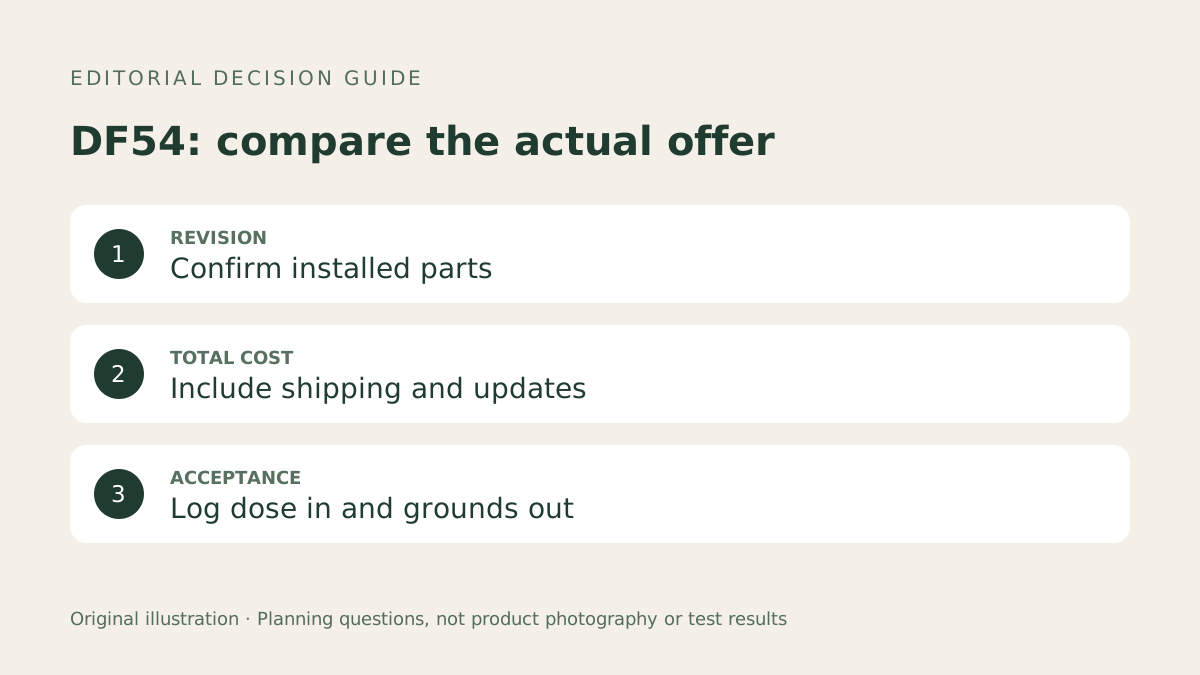
Write down delivered price, regional return terms, who pays return shipping, and the route for replacement parts. An illustrative $10 saving disappears if the less convenient offer adds $15 in shipping; neither number is a current quote. Ask whether routine cleaning requires recalibrating your reference setting and whether replacement burrs are sold for the exact model. Follow the manual rather than assuming removable metal parts can be washed. A useful comparison includes the time and uncertainty of obtaining service, even when neither can be reduced to a precise dollar figure.
A practical acceptance comparison
Keep the packaging during the seller’s return period. Use the same beans and dose on repeated preparations, record the setting and collected mass, and note spills or interruptions. Compare effort and convenience in your own hands without claiming laboratory torque measurements. To compare coffee taste fairly, first dial in each grinder separately: identical click counts do not create comparable grounds. We have not carried out that test, so our recommendation remains about documented controls and workflow, not which model tastes sweeter.
A two-recipe setting card you can reuse
Make one row for your filter recipe and one for espresso. Record the exact model, reference point defined in its manual, setting, beans, dry dose and beverage output or brew water. When changing methods, return using the manufacturer’s procedure and verify your note; never force a burr-touch reference. The first shot after switching is a check, not proof that a setting transfers perfectly. Keeping a separate reference for each grinder avoids confusing 48-click and 50-click mechanisms.
How we research these guides · Find your next step