 CupClarityOur approach
 TIMEMORE S5 Pro vs C5 ESP Pro: adjustment, capacity and daily use
Compare the same-brand hand grinders by practical differences: 15-micron adjustment, packed weight, usable capacity and the evidence needed to justify an upgrade.
Research-based comparison, sources checked October 2, 2026. Manufacturer statements are attributed; scenario calculations and buying judgments are our analysis. We have not performed a hands-on or taste test. Hypothetical prices are not live offers. Original illustration; no affiliate links.
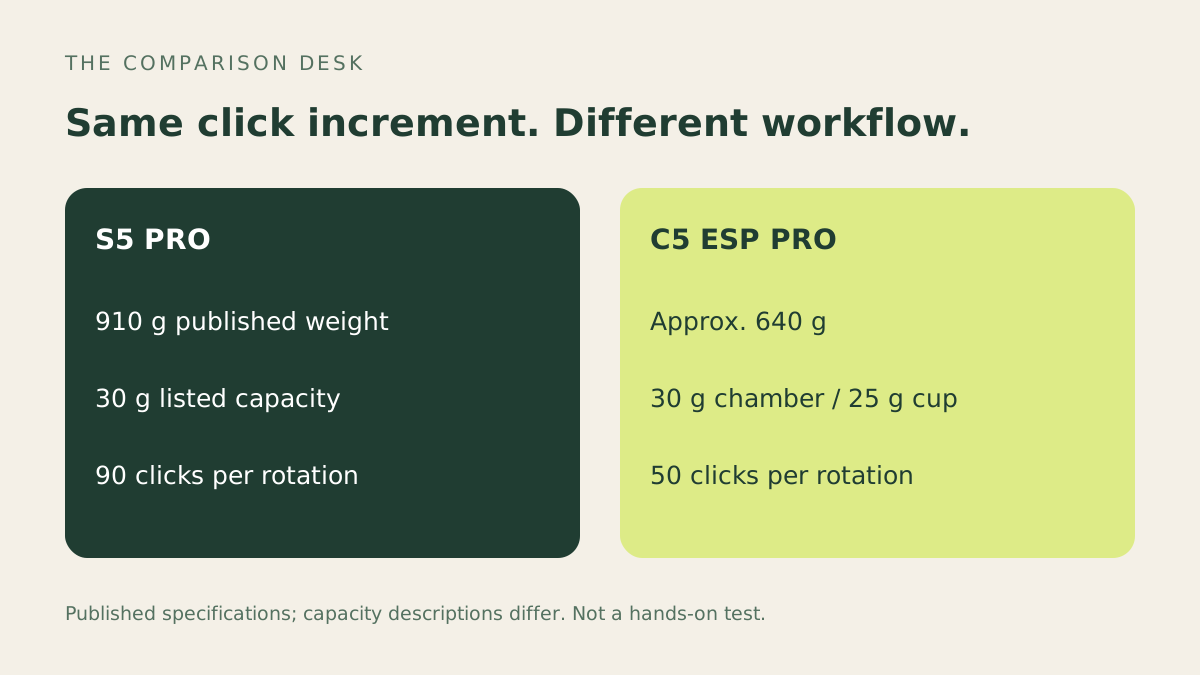
| Official specification | S5 Pro | C5 ESP Pro |
|---|---|---|
| Burr | 48 mm TriB-048-I | 42 mm S2C-042-III |
| Click increment | 15 microns | 0.015 mm = 15 microns |
| Clicks per rotation | 90 | 50 |
| Published weight | 910 g | Approximately 640 g |
| Capacity wording | 30 g; container distinction not specified | 30 g chamber / 25 g catch cup |
| Handle | 185 mm, folding | 167 mm extended, folding |
| Independent taste or effort test here | Not performed | Not performed |
The short answer: choose around handling and workflow
The C5 ESP Pro is the lighter candidate on the published figures; the S5 Pro offers an external adjustment arrangement and a different burr design. Both are worth investigating for an espresso-oriented manual setup, but neither wins on a specification sheet alone. Start with your normal dose, the number of drinks you make consecutively, and whether changing settings is a frequent interruption. If the current grinder already meets those needs, a larger model number is not a reason to replace it.
What the specification table can and cannot compare
The table combines the official C5 series page and S5 Pro design notes linked below. The capacity descriptions are not identical: the C5 page distinguishes a chamber from a catch cup, while the S5 specification gives one capacity figure. Treat that as an evidence gap, not permission to claim five grams of extra usable receiving capacity. Likewise, burr diameter is a physical dimension, not a flavor score. We have no matched measurements of particle distribution, grind time, retention or hand effort for these two units.
Why the same click increment does not mean the same grounds
The published increments are both 15 microns, with different click counts per rotation. That does not make the settings interchangeable. The starting point, mechanism and burr geometry still matter. Write down the model alongside every recipe setting; never transfer a click number on the assumption that the output will match. If you often switch from espresso to filter, a conveniently accessible control may be valuable even without a proven change in flavor. Whether its placement feels better in your hand is something to assess directly rather than infer from a photograph.
Use a dose worksheet before buying
Consider three illustrative routines: one 18 g drink, two separate 18 g drinks, or a shared 40 g batch. The first is below both nominal capacity figures. The second can be treated as two independent preparations, keeping each recipe easy to repeat. The shared batch exceeds both listed single-container figures and requires a planned split. On the C5, the smaller catch cup matters even when the chamber can accept more. For the S5, confirm what the stated capacity covers and follow the manual rather than filling to a numerical limit. We have not measured fit with different bean densities.
The weight difference is real arithmetic, not a comfort verdict
Subtracting approximately 640 g from 910 g gives a published-weight difference of about 270 g, or roughly 42% relative to the lighter figure. That is useful for a travel packing budget. It does not tell you which grinder is more comfortable to hold: grip, posture, roast and grind setting all enter that experience. Include your brewer, scale, beans and case when comparing packed kits. For a grinder that stays on the counter, handling and storage access may matter more than the percentage difference.
Compare maintenance and support before a discount
For each exact offer, record delivered price, seller identity, return shipping responsibility and the route for replacement parts. Ask which routine cleaning steps the manual permits and how to recover your reference setting after cleaning. Do not infer part compatibility from shared branding or adjustment increments. An apparently cheaper imported offer may be inconvenient if service requires international shipping. We have not verified current inventory or a same-market delivered-price comparison, so this guide does not name a price winner.
When an upgrade is worth investigating
If adjustment access disrupts every session, compare that operation directly. If consecutive drinks make hand grinding tiring, moving to another manual grinder may not address the underlying problem; compare an electric workflow too. If you are chasing a flavor change, seek a matched comparison with both grinders separately dialed in on the same coffee and brew method. Testing identical click counts would not establish a fair result. Keep any taste conclusion separate from the manufacturer’s claims and from our handling analysis.
Our decision by scenario
For frequent travel, investigate the lighter C5 ESP Pro first, provided its workflow suits the dose. For a home setup where external setting changes are the specific attraction, investigate the S5 Pro and verify its capacity details before ordering. For a satisfied existing owner, keep the current grinder until a named limitation and credible evidence justify the expense. The strongest unresolved questions are comparable hand effort, actual grinding time and taste after proper dial-in; this article does not fill those gaps with an invented winner.
How we research these guides · Find your next step